50-52 Pitman Ave
1889 James A. Wainright, dry goods
1897 W. E. Dodge & Company, groceries
1901 Wedel’s Variety Store
1903 Clevenger & Summers, groceries.
? ? Atlantic and Pacific Tea Company, groceries. Still at location in 1934
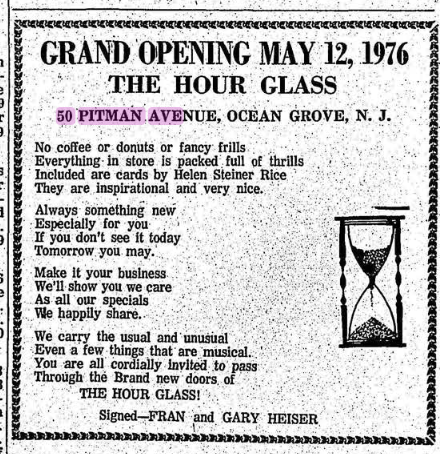
?? Sky High Kites
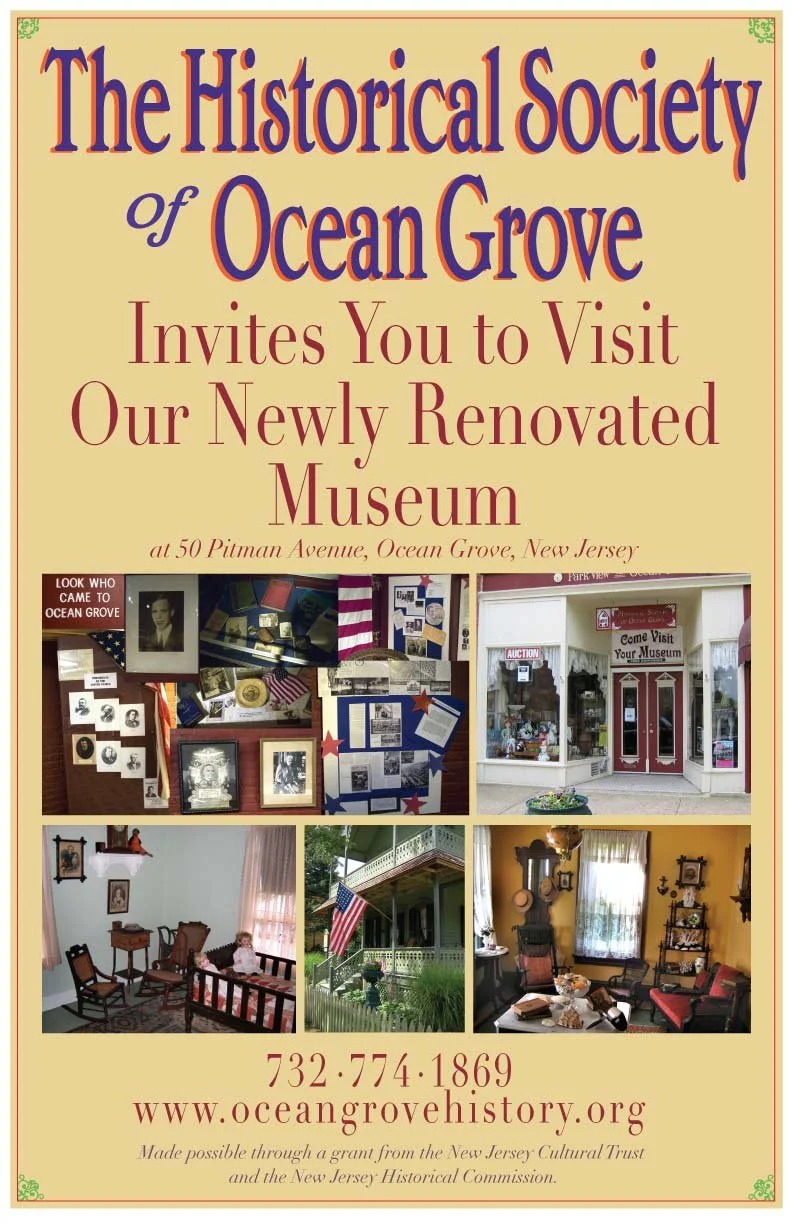
1997 Historical Society of Ocean Grove.
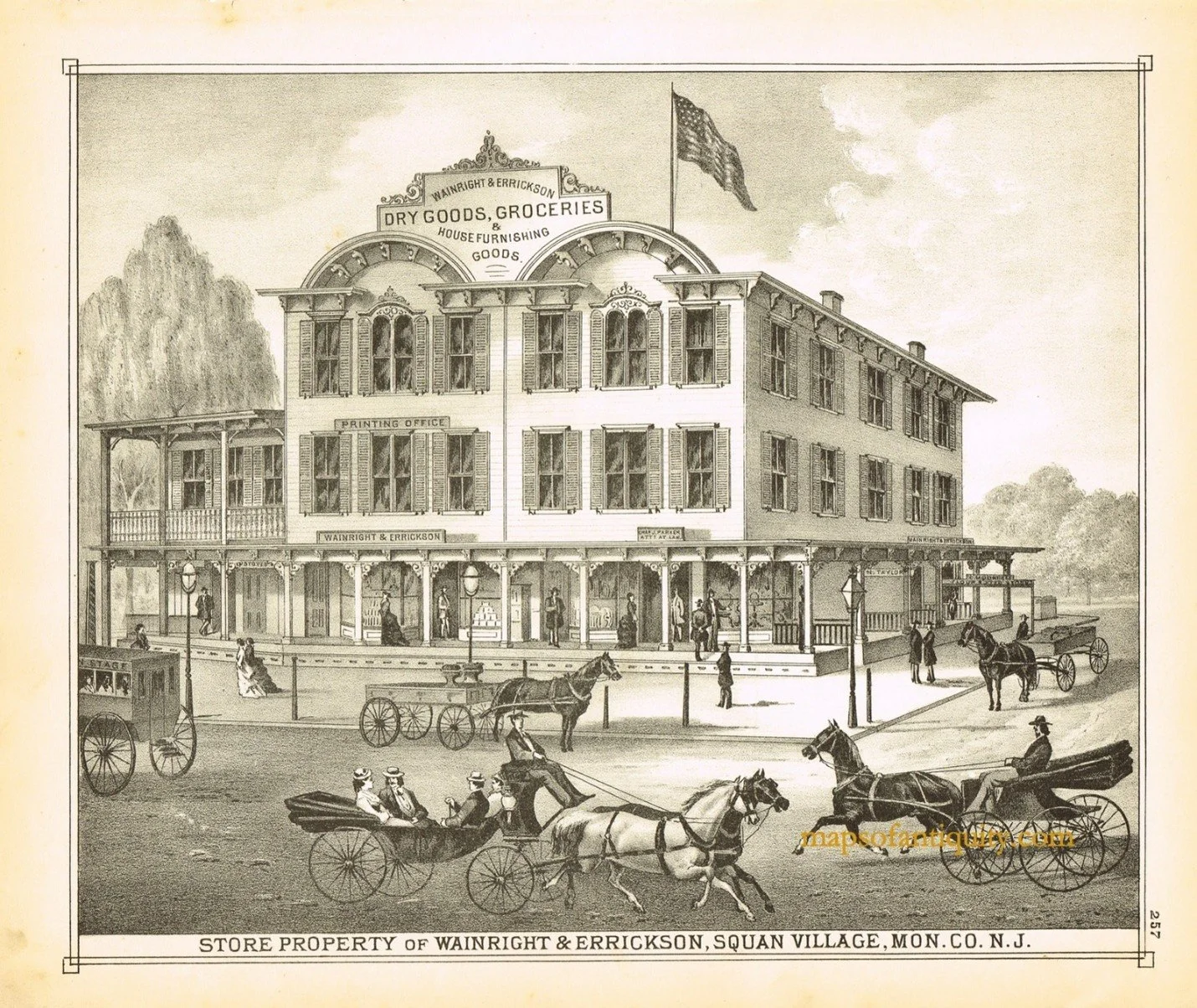
THEN…
NOW…
History of the Historical Society of Ocean Grove Museum Building
Research by David H. Fox, 2020
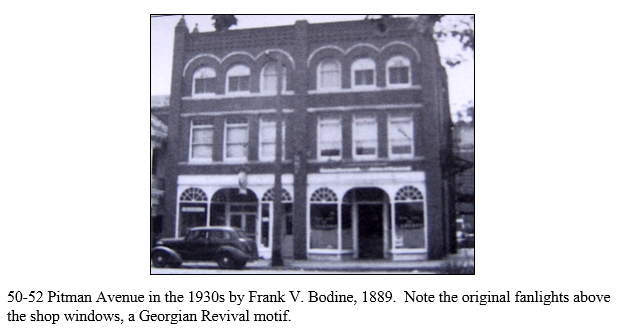
The building at 50 Pitman Avenue was constructed in 1889 by the Ocean Grove Camp Meeting Association to replace a cluster of wooden storefronts with a permanent brick commercial structure. Approved in early 1889, the project reflected Ocean Grove’s growth and the desire for durable, modern facilities in the town’s commercial core.
Designed by architect Frank V. Bodine and built by contractor Robert S. Johnston, the building cost more than $11,000 upon completion. Its eclectic architectural style combines red brick and limestone with Romanesque Revival arches on the upper floors and Georgian Revival influences in the original storefronts, marking a transitional moment in late-19th-century design.
The building opened in May 1889, anchored by the Wainright general store, which offered groceries, furniture, and household goods. A meat market and drugstore also occupied the structure, serving residents and seasonal visitors and making the building a hub of daily life in Ocean Grove.
Over the decades, the building housed a variety of businesses and organizations, most notably serving as Masonic Hall from the 1930s through the 1980s. In 1997, the Historical Society of Ocean Grove acquired the property, preserving it as a museum and ensuring its continued role in telling the story of the community’s commercial, architectural, and social history.
A Labor of Love:
Building the Archives of the Historical Society of Ocean Grove
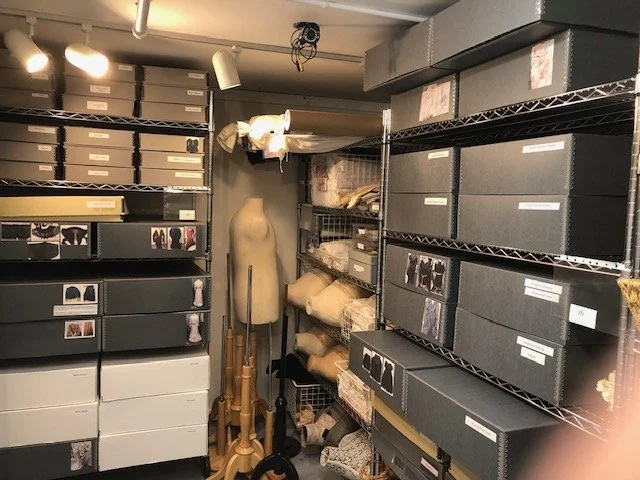
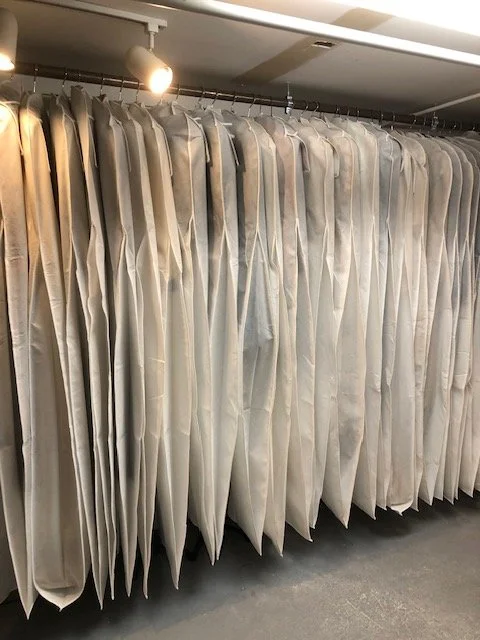
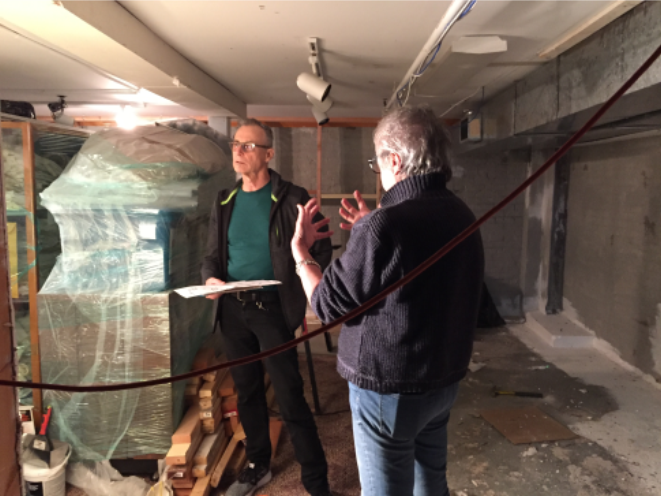
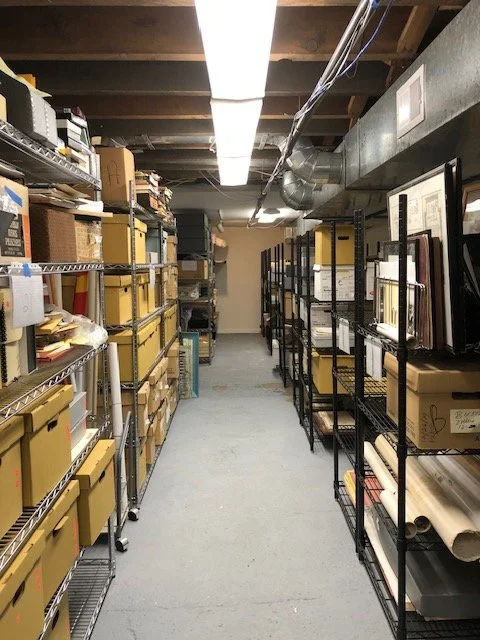
What visitors see today when they step into the Historical Society of Ocean Grove’s archives—a clean, organized, accessible space designed to preserve the town’s rich history—did not happen by accident. It is the result of years of persistence, vision, and an extraordinary amount of unpaid labor by people who cared deeply about saving Ocean Grove’s story. At the center of that effort are current Historical Society President Bob Waitt and Museum Curator Deborah Osepchuk, whose complementary skills transformed what was once a chaotic basement into a living, breathing archive.
Deb’s involvement with the Historical Society began almost by chance. “I first got involved when Ted Bell, a founding member of the Historical Society of Ocean Grove, asked me if I would help with the Beersheeba Awards,” she recalls. At the time, Deb was on the Historic Preservation Commission and had access to files on every house in Ocean Grove. The awards committee needed help distinguishing between homes that were truly preserved according to guidelines and those that were simply attractive.
That work led to something bigger. For Ocean Grove’s 150th year anniversary, Deb and Jen Shaffer created and presented a lecture titled 150 Years of Architecture in Ocean Grove. “We sold tickets and filled Nagles,” she said. “That was really the first lecture that the Historical Society did. It grew from there.” But while programming expanded, the archives themselves told a different story.
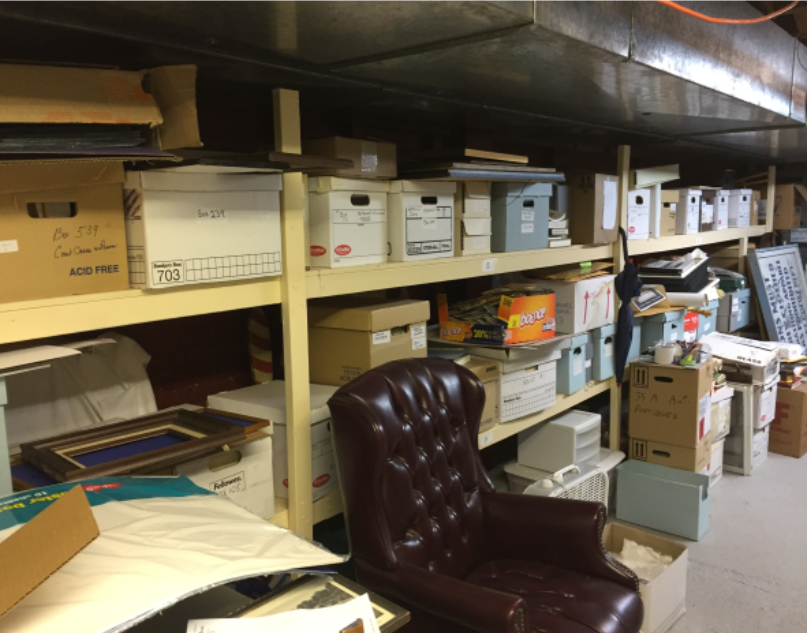
When Deb first encountered the archive space, what she found was alarming. Although some earlier volunteers had attempted to organize materials, the system they used was complex and unsustainable. “They were organizing them in ways that was more like the Library of Congress or something,” she explained. “There was no user-friendly method.” Moreover, when those individuals stopped working on the project, everything collapsed. “It became a dump. And things were just thrown in there… Photographs were stacked one on top of another. Beautiful dresses were thrown in garbage bags. It was a disaster.”
Deb couldn’t ignore it. “My OCD kicked in and I said, I can’t. No, no. I can’t have it like this.” She began cleaning, sorting, and discovering treasures hidden beneath neglect—Victorian dresses, historic photographs, irreplaceable documents. There weren’t even proper shelves in the beginning. “It was horrible. It was really horrible,” she said. Slowly, with help from others, including many locals such as friend and frequent volunteer Julain Hamer, the work began.
When Bob became president of the Historical Society, his focus shifted to the archives. “One of my first tasks when I was President the first time was to get this thing done,” Bob said. The urgency was real: a $25,000 donation had already been given specifically for the archives by Mary & Bob Skold, and nothing visible had happened. Bob knew they needed expert advice, so he called Eric Landsberg, a digital archivist from the Museum of Modern Art.
Eric didn’t sugarcoat what he saw. “He said, ‘This is a big job… This is a mess,’” Bob recalled. The list of requirements was daunting: climate control, steel shelving, acid-free archival boxes, sealed walls, and proper storage systems. Eric estimated the cost at over $100,000. Bob had $25,000.
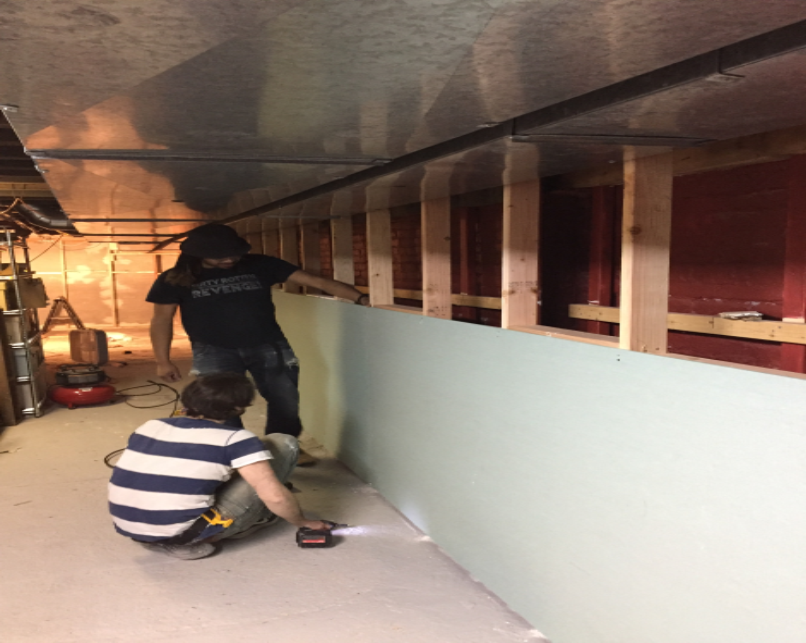
Instead of giving up, Bob got to work. He enlisted Jim Twerell, who had experience building large-scale installations, and together they did much of the labor themselves. “I was down there with hazmat suits on… cleaning the walls at 2:00 in the morning.” They found creative solutions—Home Depot shelving instead of museum-grade units, negotiated prices, and countless hours of manual labor. “I’m working here 12, 14 hours a day,” Bob said.
Against all expectations, the mechanical rebuild of the archive was completed in about six months, for just under budget. When Eric returned to see the finished space, he was stunned. “He said, ‘How the hell did you do this so quick?’” Bob remembered. Eric later told him he planned to show the Ocean Grove archives as a model for other historical societies.
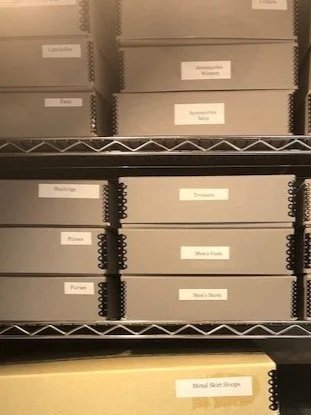
While Bob built the structure, Deb built the system inside it. “The whole idea behind what I’m trying to do down there… First of all, preservation, obviously, is the number one goal.” Everything is stored using proper archival materials, but accessibility matters just as much. “It has to be organized, but it’s got to be done in a way that things are easily found… for anybody.”
Hotels, homes, businesses, and landmarks like the Great Auditorium are all categorized. Deb’s vision is an archive where someone can walk in and say, “I want to find out about such and such a hotel,” and “boom, in two seconds, have that information.” Her long-term plan includes a full index system so any member of the HSOG staff can locate materials quickly without specialized training.
Despite how organized it appears, the work is far from finished. “We are still in triage mode,” Deb said. “There are still boxes I haven’t opened yet because I can’t get to them.” And the archive is constantly growing. “It’s a living, breathing archive,” she explained. “People are always bringing stuff in.”
For the HSOG, the work is about more than preserving the past. As Deb explained “This is not just about taking care of the past, we’re also building for the future. None of this matters if we don’t take care of it to show future generations… So I just save it all.”
Today, the Mary & Bob Skold Archives at the Historical Society of Ocean Grove have drawn attention from historical societies across multiple states. “We now have people coming from Maryland, Pennsylvania, Connecticut, New York… to see what happened here,” Bob said. What they see is not just a well-designed archive, but proof of what’s possible when passion, ingenuity, and love for local history come together.
What exists beneath the Historical Society is more than shelves and boxes. It is a testament to countless volunteer hours, stubborn determination, and a shared belief that Ocean Grove’s story is worth saving—carefully, thoughtfully, and for generations to come.