LAKE AVENUE
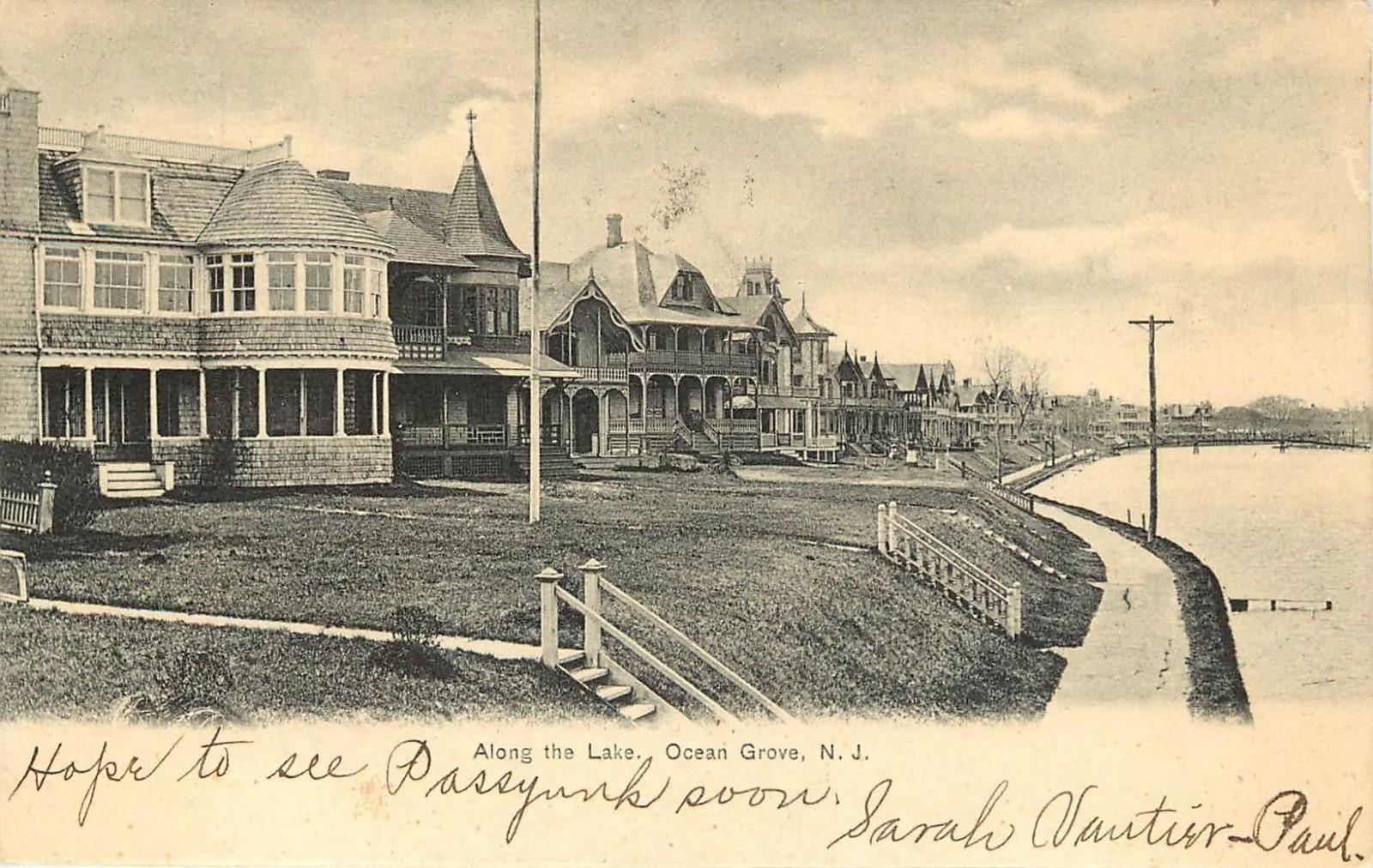
Lake Avenue, named for the path lining Wesley Lake, formed Ocean Grove’s northern boundary. It was originally called Long Pond but was soon renamed to honor Methodist founder John Wesley. Early maps show the lake once extended farther west and was fed by several tributary streams, now vanished, while its eastern end functioned as a tidal estuary where fish such as herring spawned. In 1871, Rev. E. H. Stokes proposed damming the lake to deepen it, and by 1874 it was considered fresh water; the lake also supplied ice commercially in the early 1870s, though water quality soon declined. Crossings evolved from ferries and temporary winter bridges to iron bridges in 1889 and the present concrete spans in 1932, while the dam helped spur a popular boating culture that eventually required regulation and the creation of a Lake Police in 1878. The homes of Lake Ave have some of the longest standing history in Ocean Grove including iconic hotels, and some of the grandest examples of Victorian Architecture in Ocean Grove today.
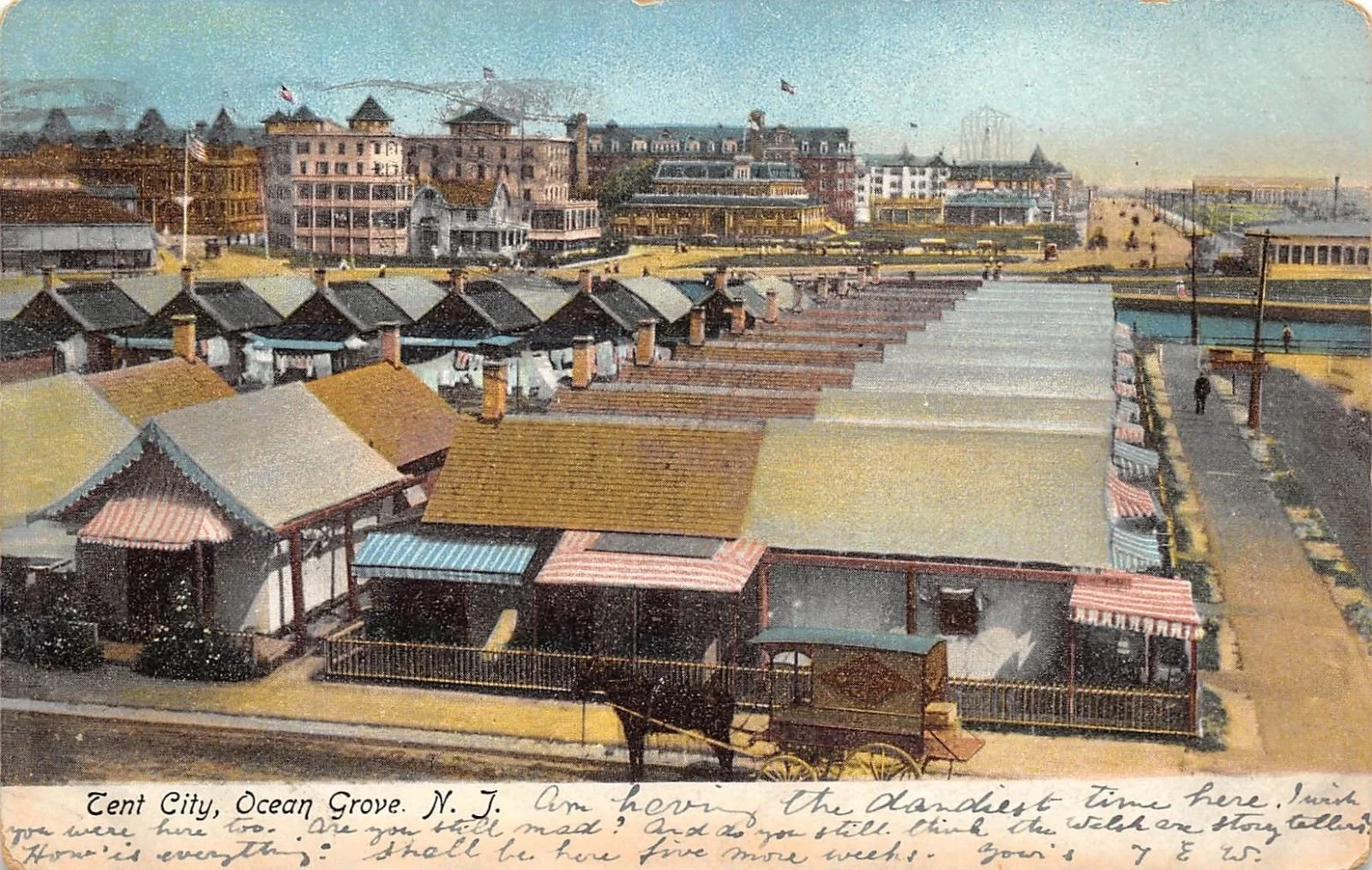
Wesley Lake Tent City (1906)
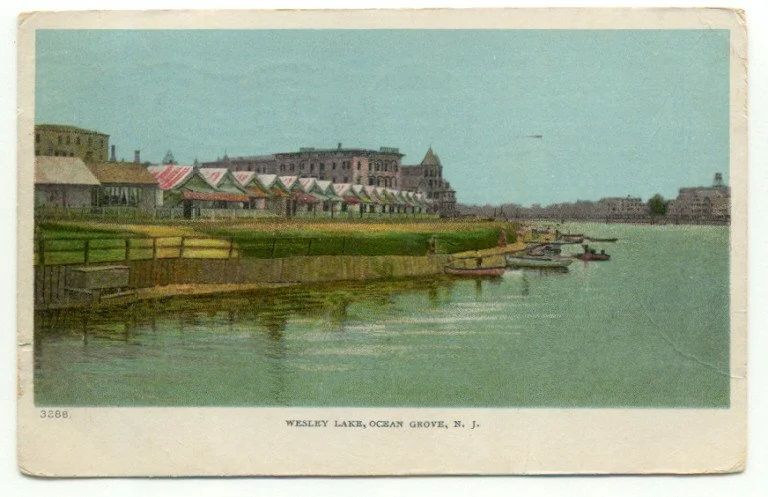
Wesley Lake Tent City (1908)
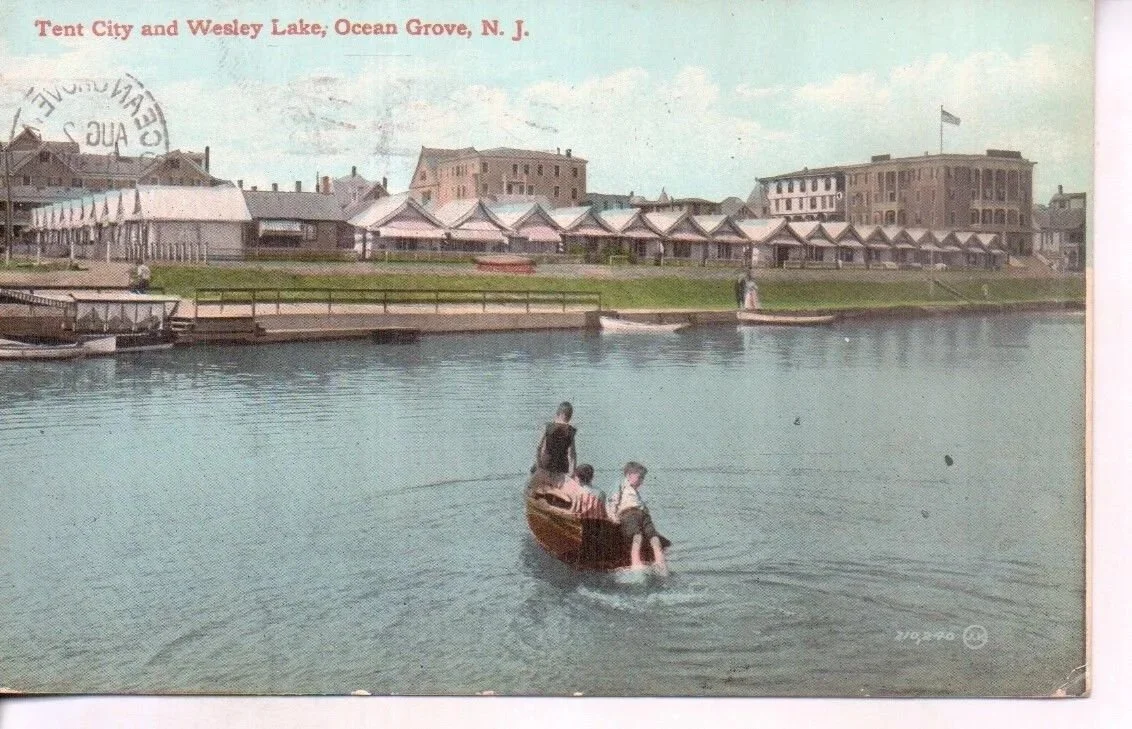
Wesley Lake Tent City (1911)
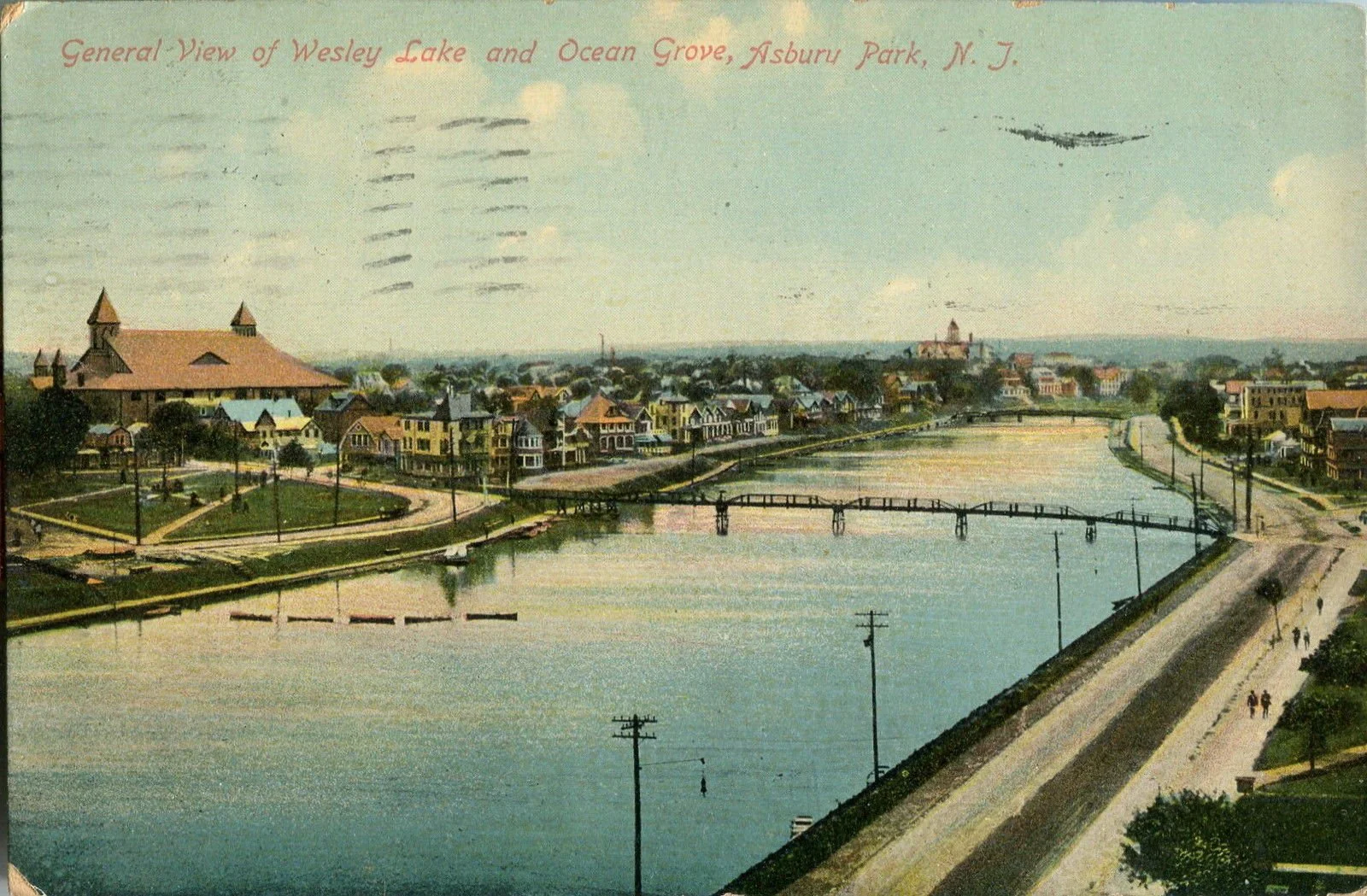
Wesley Lake (1911)
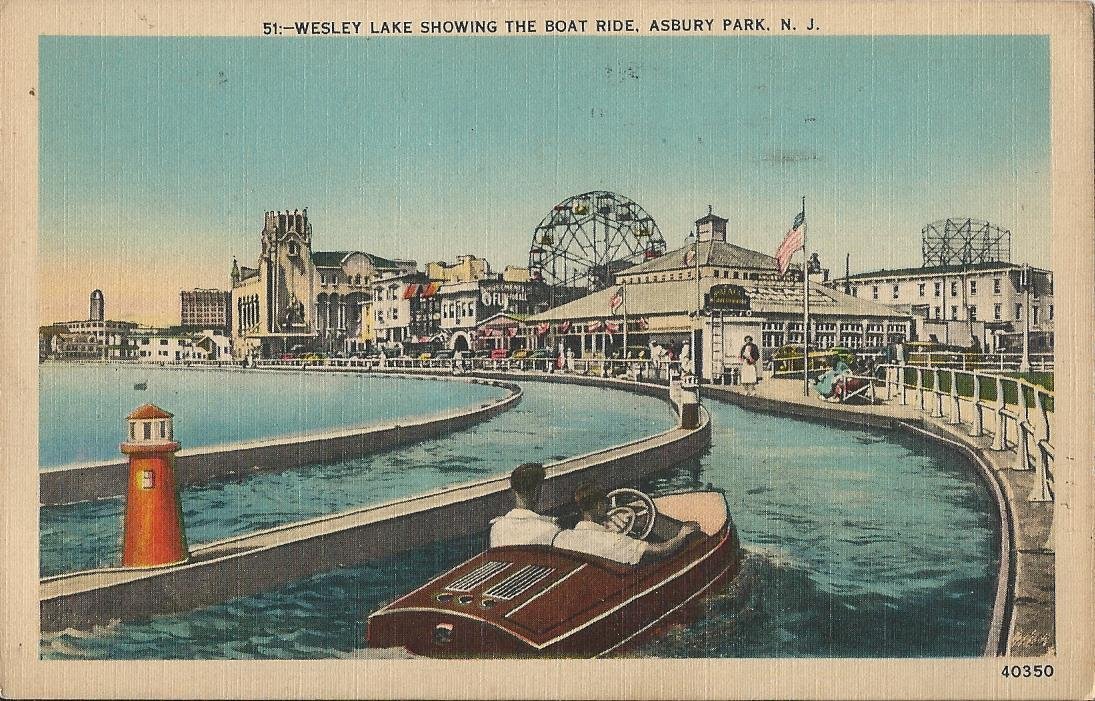
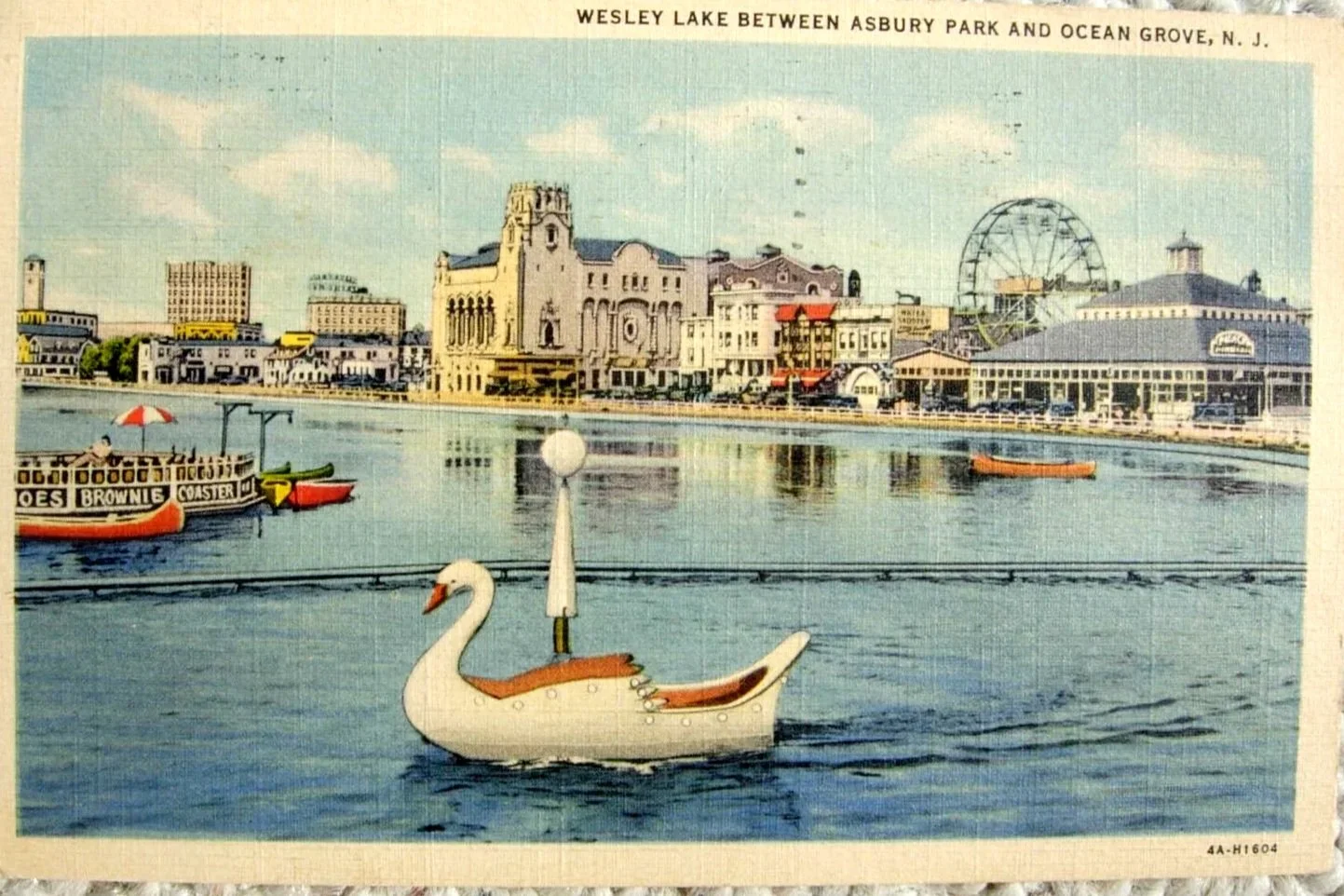

16 Lake Ave: Hotel LaPierre (1915) Hotel La Pierre, established in 1880 on Lake Avenue overlooking Wesley Lake, operated for nearly a century under various owners, expanding from a three-story seasonal hotel into a full-service summer destination offering lodging, dining, and entertainment. (Click on the image to read the full story of this hotel & to see images of the original building)

16 Lake Ave : Hotel LaPierre (1973) After changing hands multiple times and surviving fires, tragedies, and declining tourism, it was ultimately converted into condominiums in the 1980s and remains fully occupied today. (Click on the image to read the full story of this hotel & to see images of the original building)
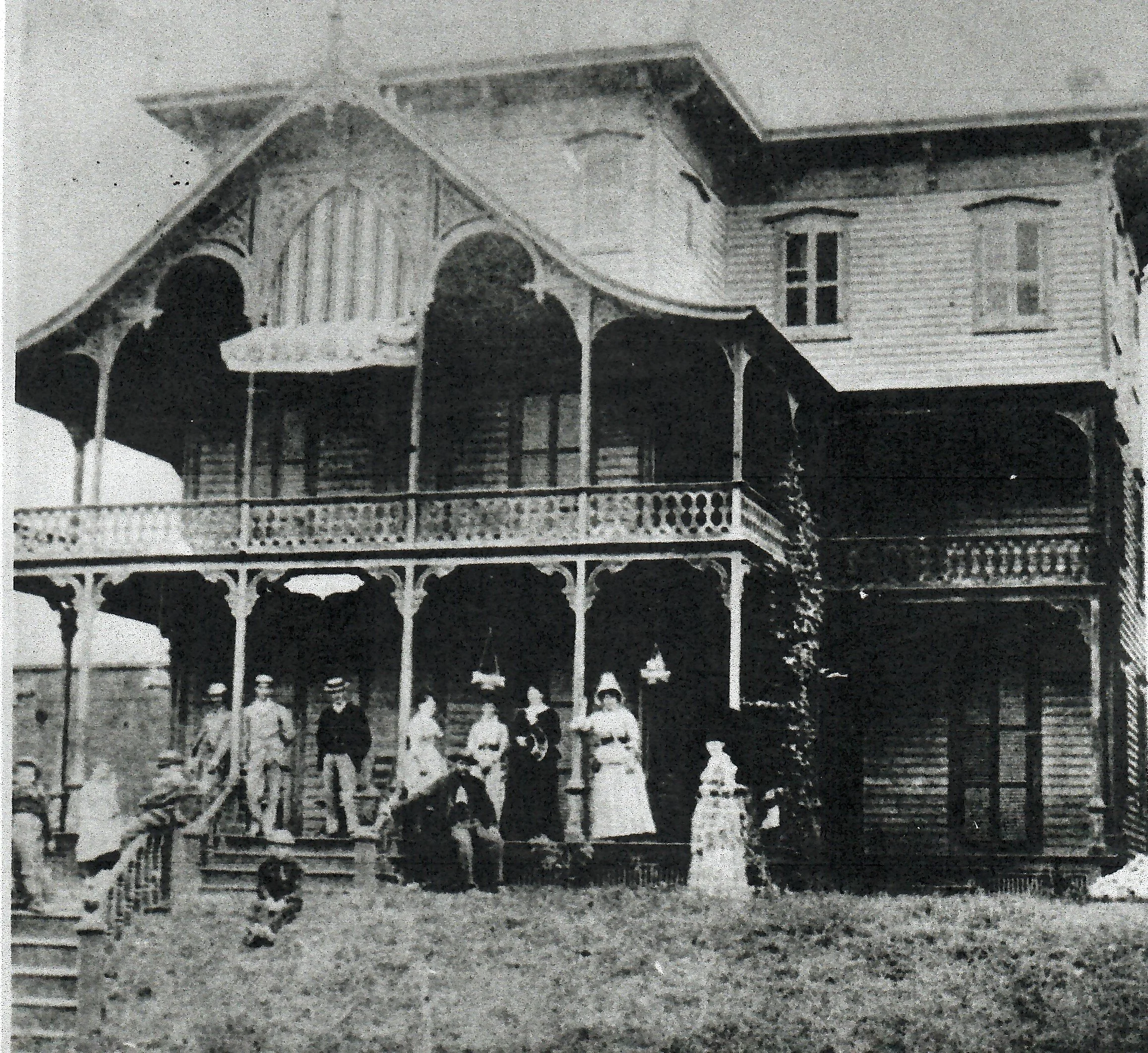
22 Lake (circa 1870s)
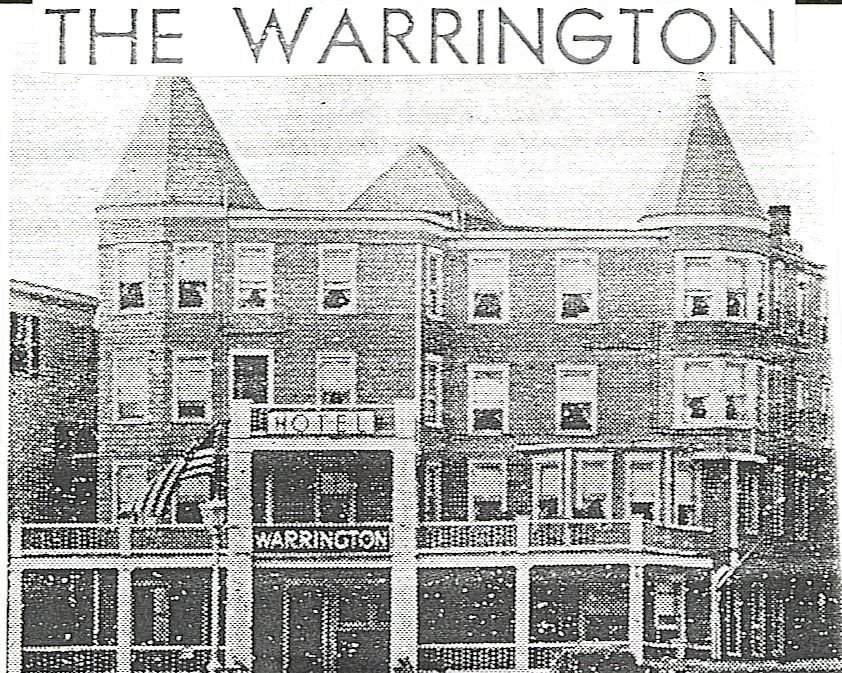
22 Lake Ave: The Warrington (1910) The Warrington Hotel, built around 1904 by members of the Brown family on Lake Avenue overlooking Wesley Lake, operated as a seasonal hotel for decades under various managers, but like many Ocean Grove hotels, it struggled through the mid-to-late 20th century due to declining tourism. (Click on the image to read this hotel's full history)
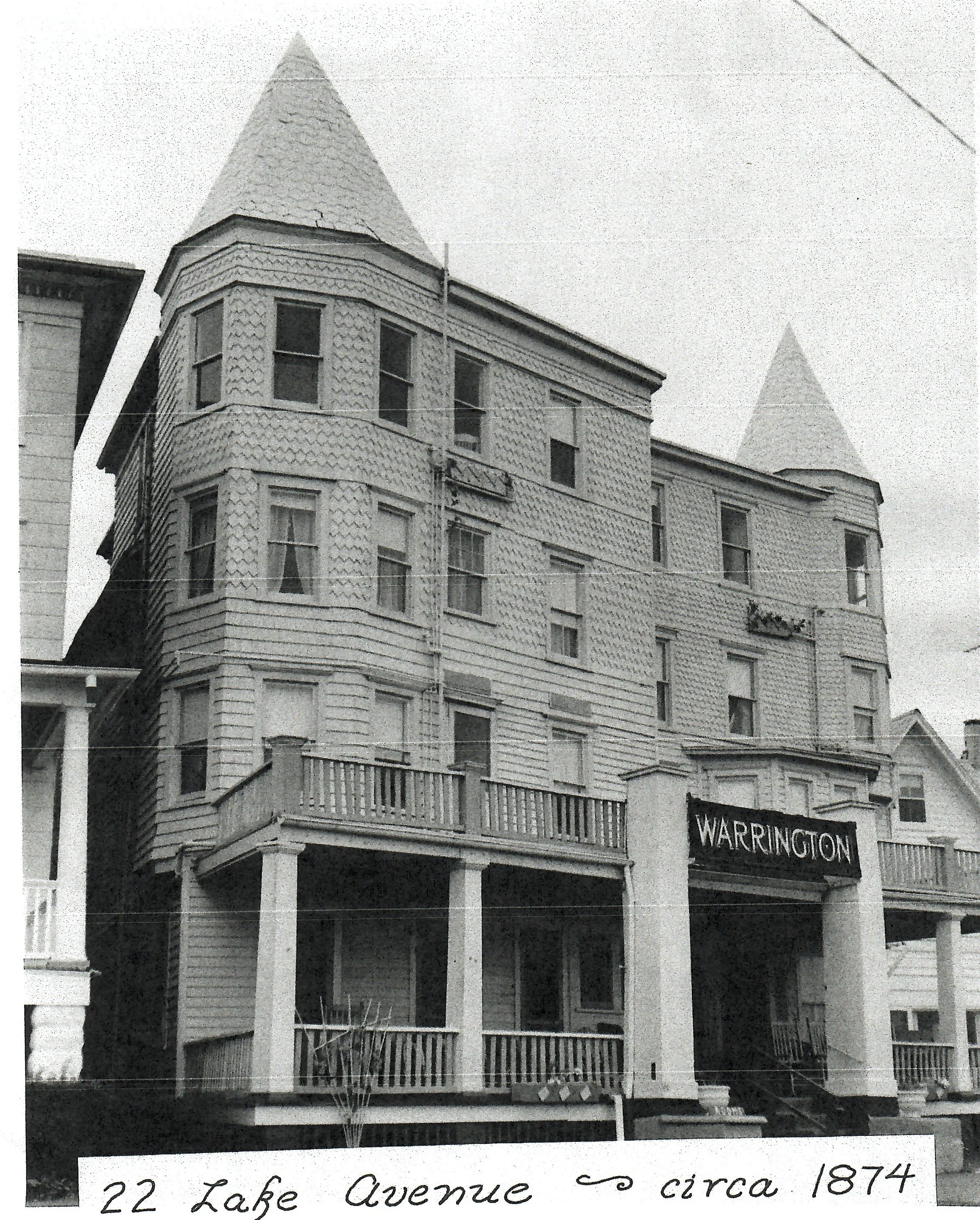
22 Lake Ave: The Warrington (taken during the bicentennial) After changing ownership multiple times and serving briefly as a boarding house and halfway house, it was sold in 2007 with plans for redevelopment, though a major wind-driven fire in 2017 damaged the vacant building along with neighboring properties. (Click on the image to read this hotel's full history)
Wesley Lake Homes (1906)
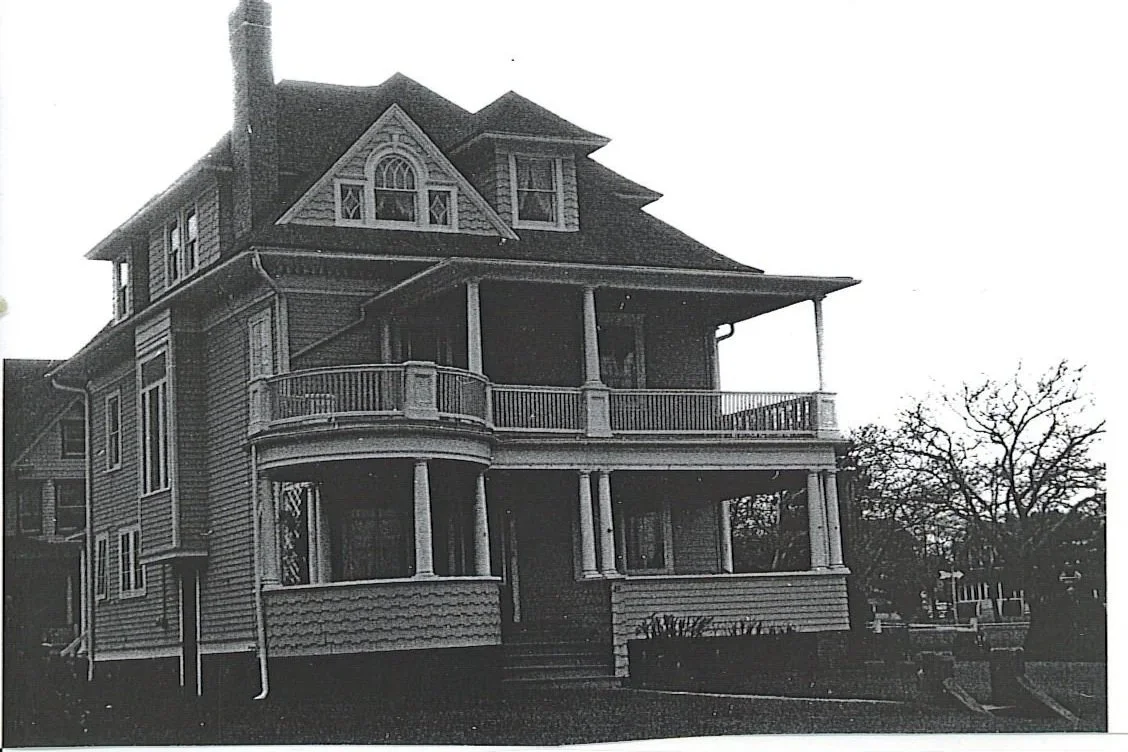
26 Lake Ave (circa 1950s)
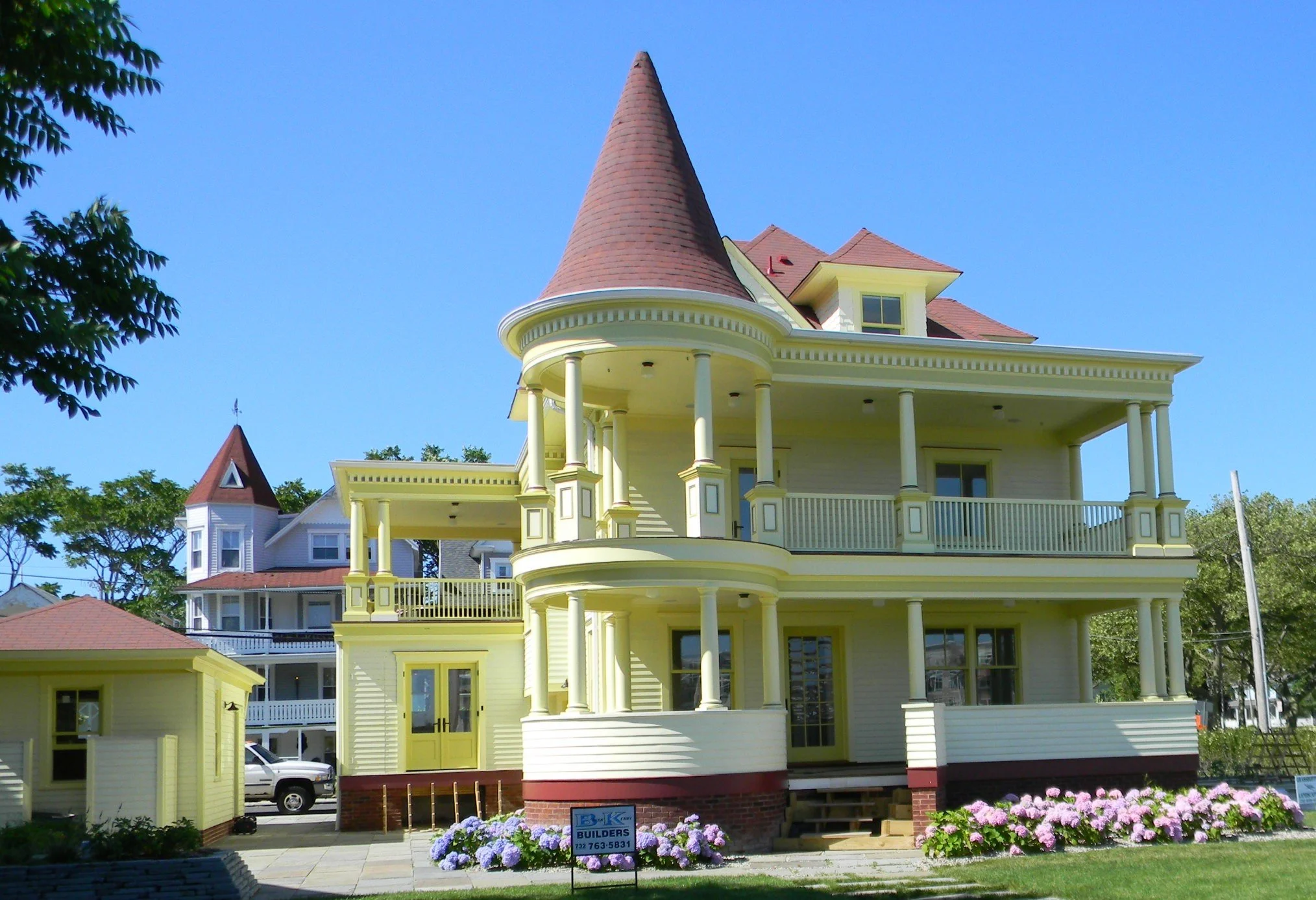
26 Lake Ave (present day)
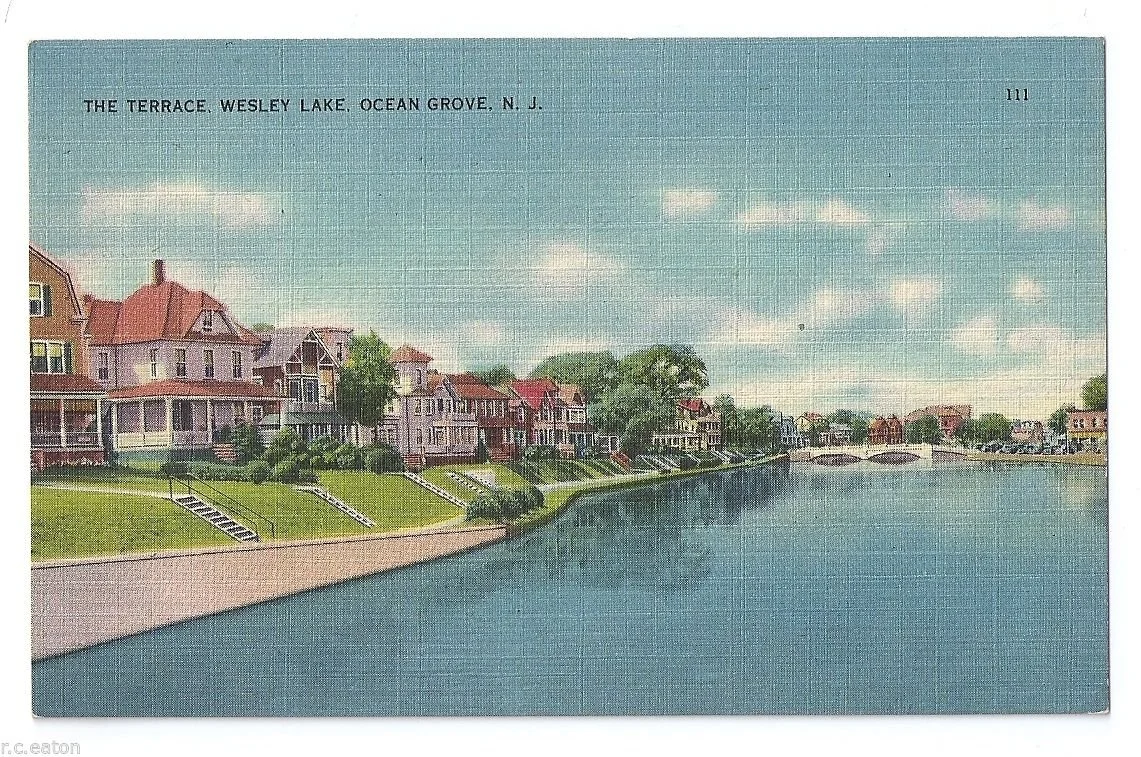
Wesley Lake (1907)
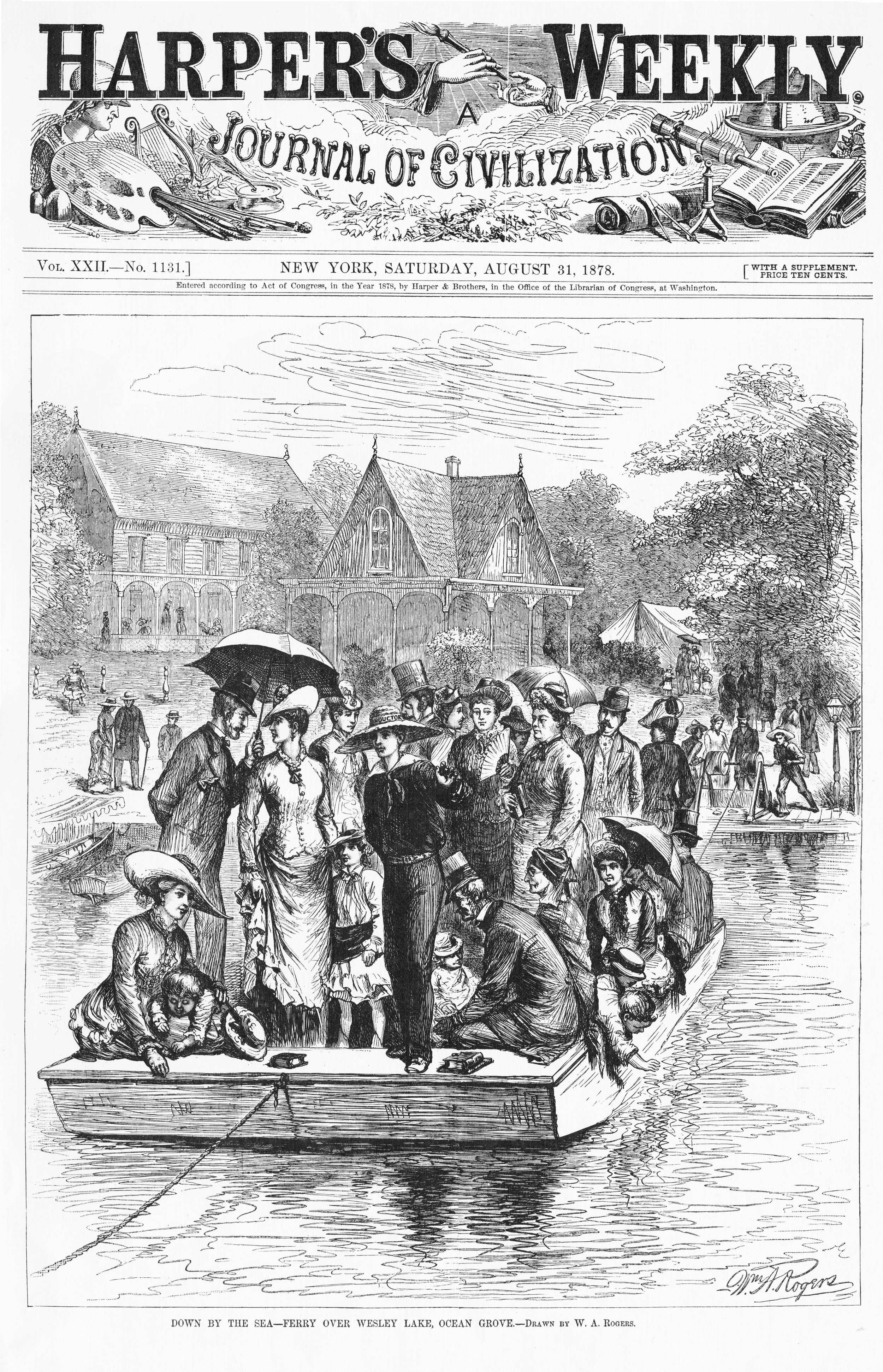
Crossing Wesley Lake: Harpers Weekly (1878) A Wesley Lake ferry was a flat rectangular barge that was pulled across with a rope. A young man wearing a large hat emblazoned with “conductor” apparently supervised the operation. Other men and boys are seen cranking the rope reel on shore. Many of the passengers are shown standing. The rope would likely have interfered with other boats on the lake.
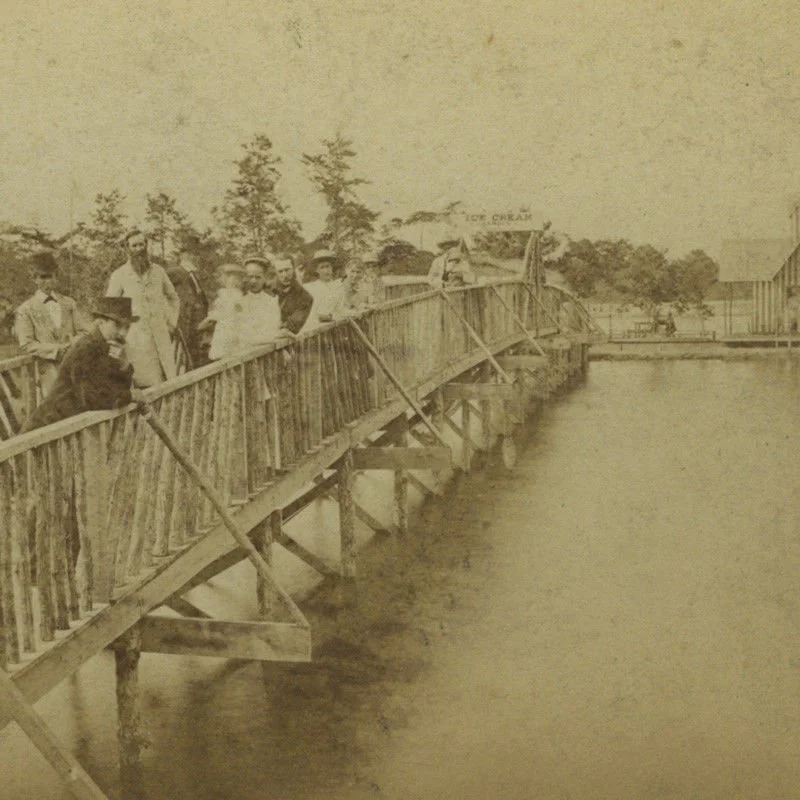
Rustic Bridge (1880) Temporary wooden bridges were installed to provide a safer and more efficient way to cross Wesley Lake—especially during the off-season and while permanent iron bridges were delayed—because the earlier ferries had limited capacity and caused congestion and safety concerns. Click the image to read the full history of Bridges in Ocean Grove.
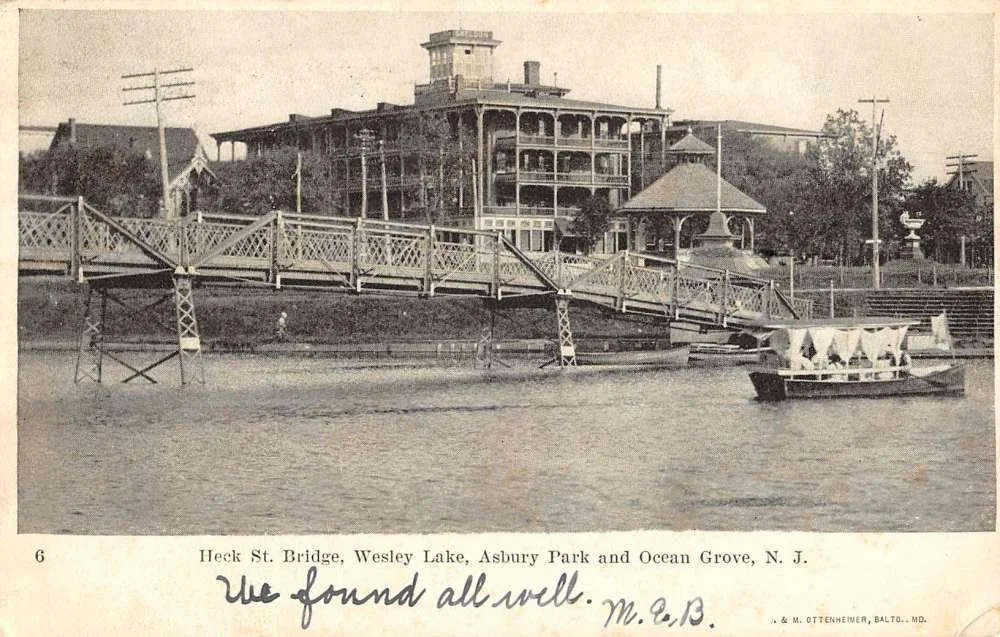
Heck Street Bridge (1906) On March 6th 1889, it was reported: "The beautiful iron bridges over Wesley Lake will prove a 'surprise ' to thousands of regular patrons of the Twin Cities when they return for their annual outing in tents, boarding houses or hotels. At the highest point of the arch of the structures a beautiful view can be obtained of both sides of the lake clear to the ocean. Click to read the full history of the Wesley Lake Bridges
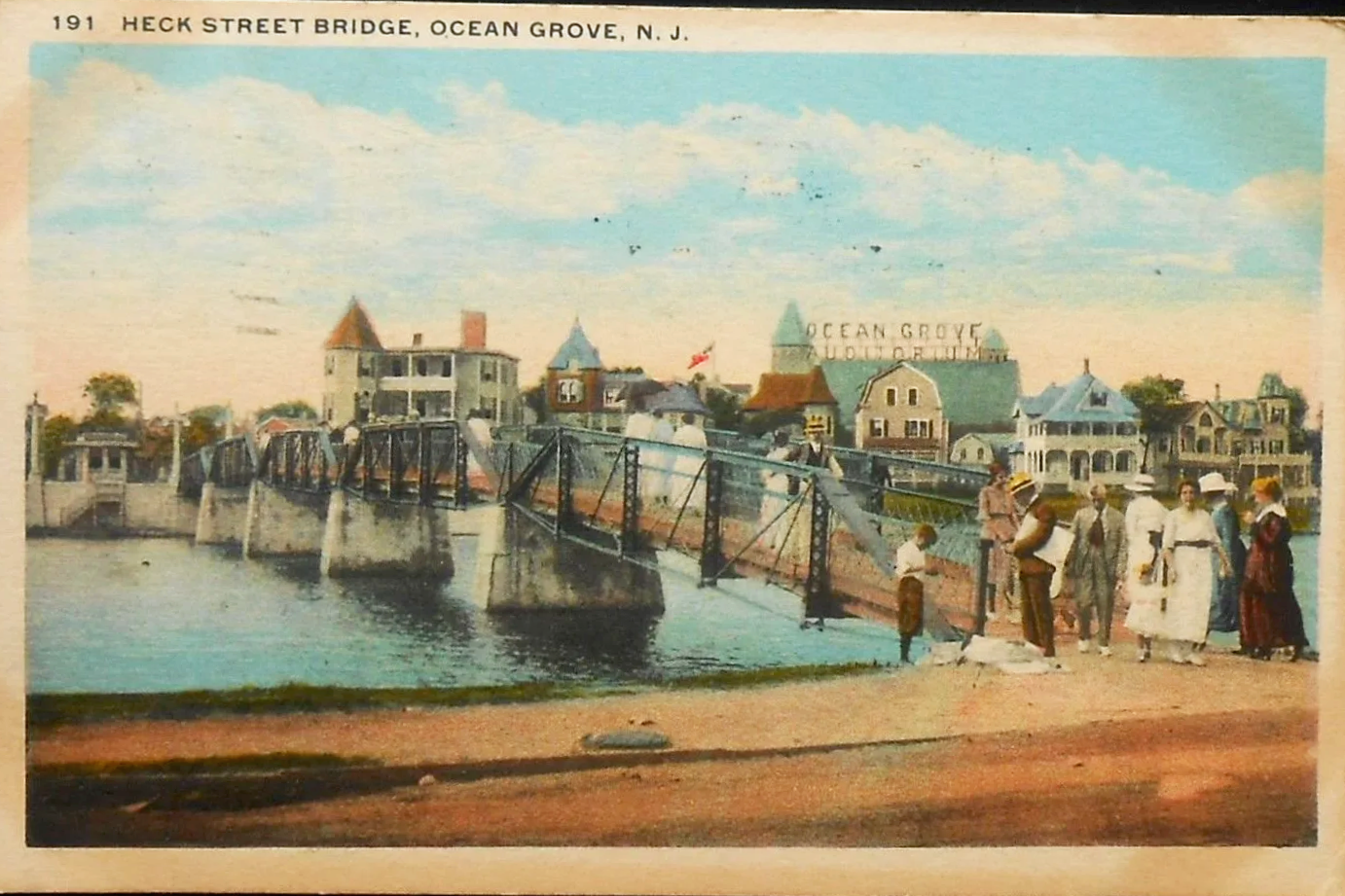
Heck Street Bridge (1921 ) On July 8, 1910, the Heck Street iron footbridge over Wesley Lake split at its center under the weight of crowds leaving a fireworks display, injuring several people—most seriously Mary Condon—though no one fell into the water and repairs were quickly made.
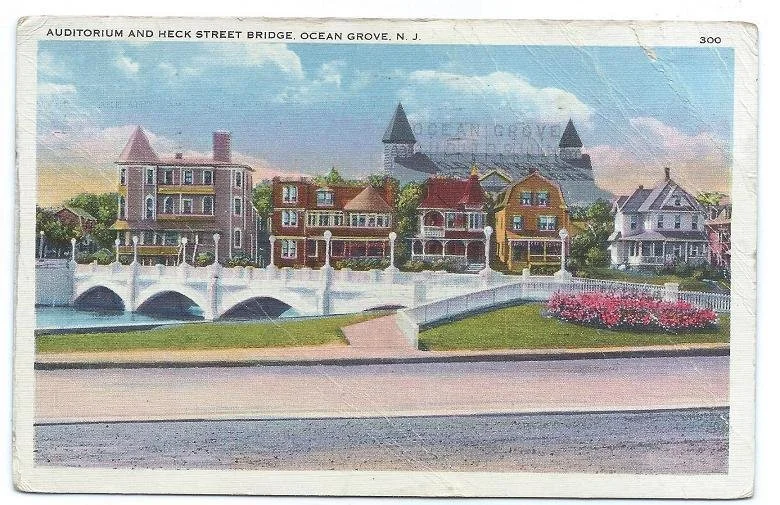
Heck Street Bridge (1935): Announced in 1930 to replace the aging iron spans, the two ornamental concrete bridges over Wesley Lake were built beginning in 1931—despite funding delays—and opened in 1932 as jointly funded crossings between Ocean Grove and Asbury Park.
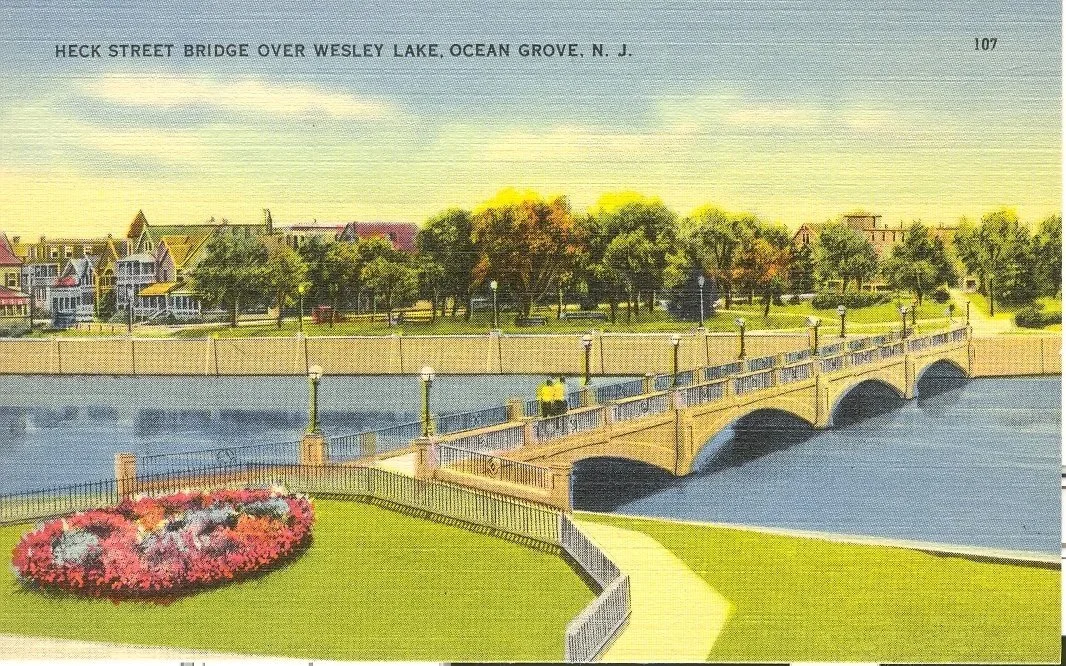
Heck Street Bridge (1939)
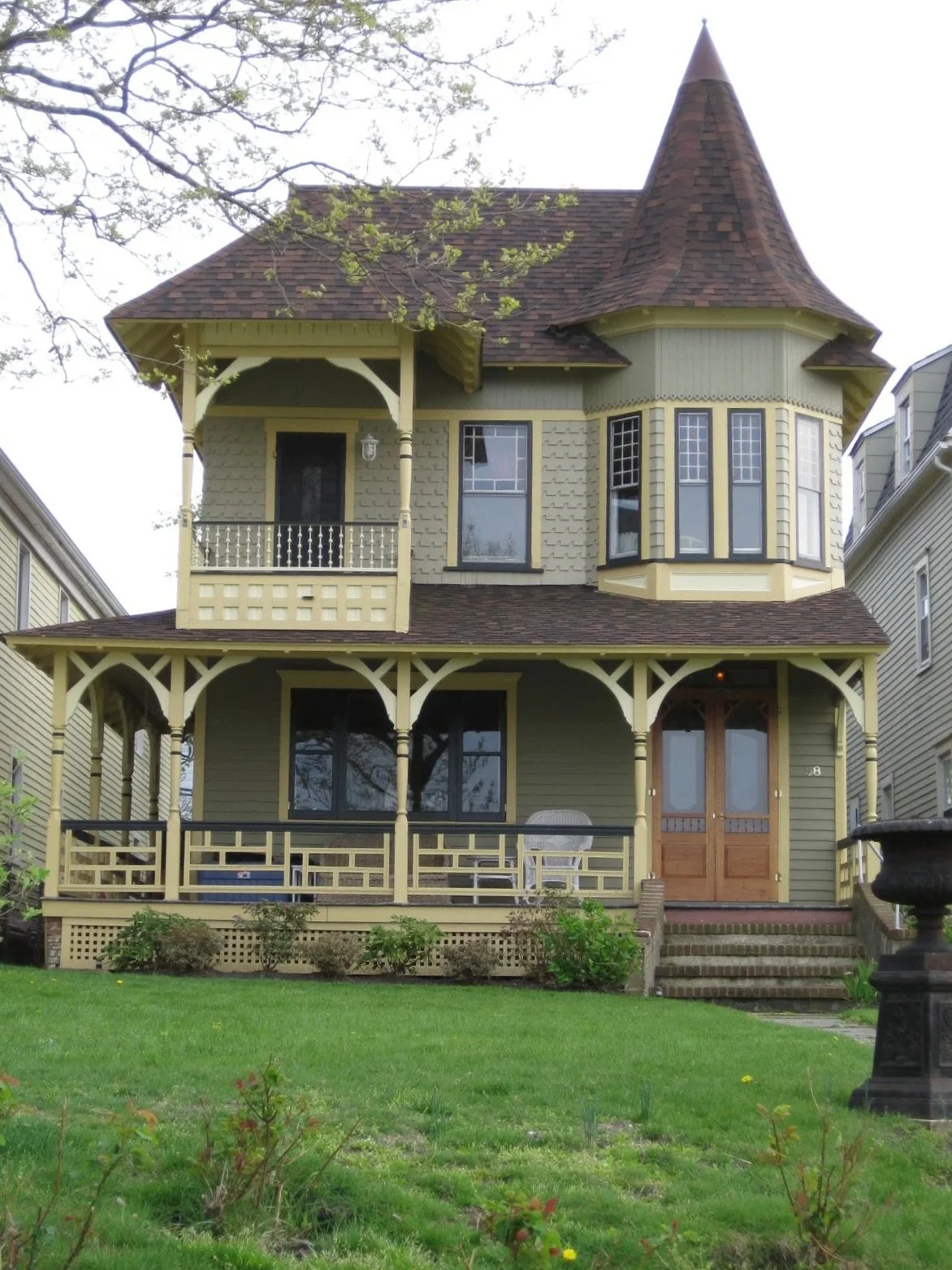
58 Lake Ave (present day)
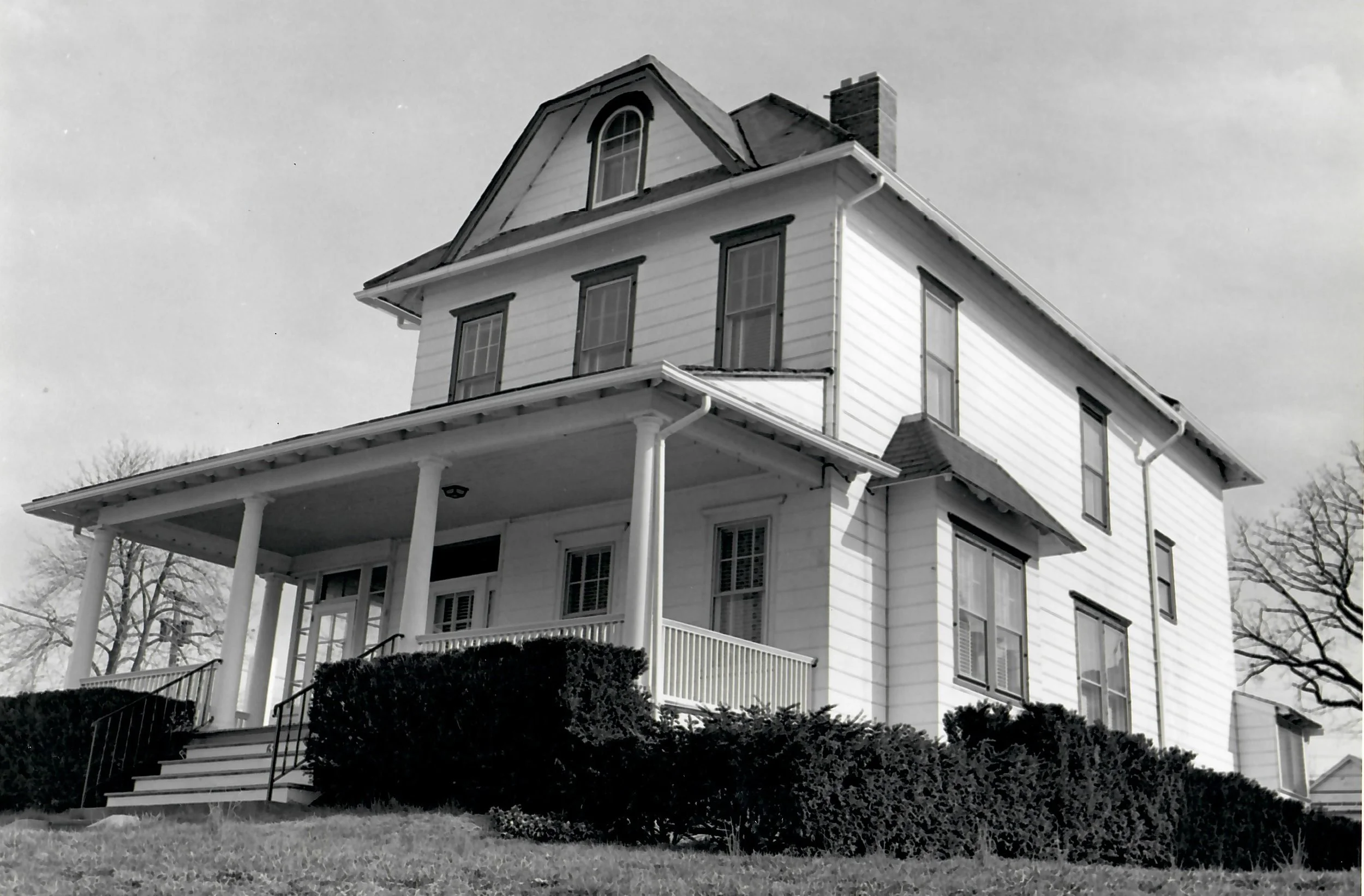
62 Lake Ave (taken during the bicentennial)
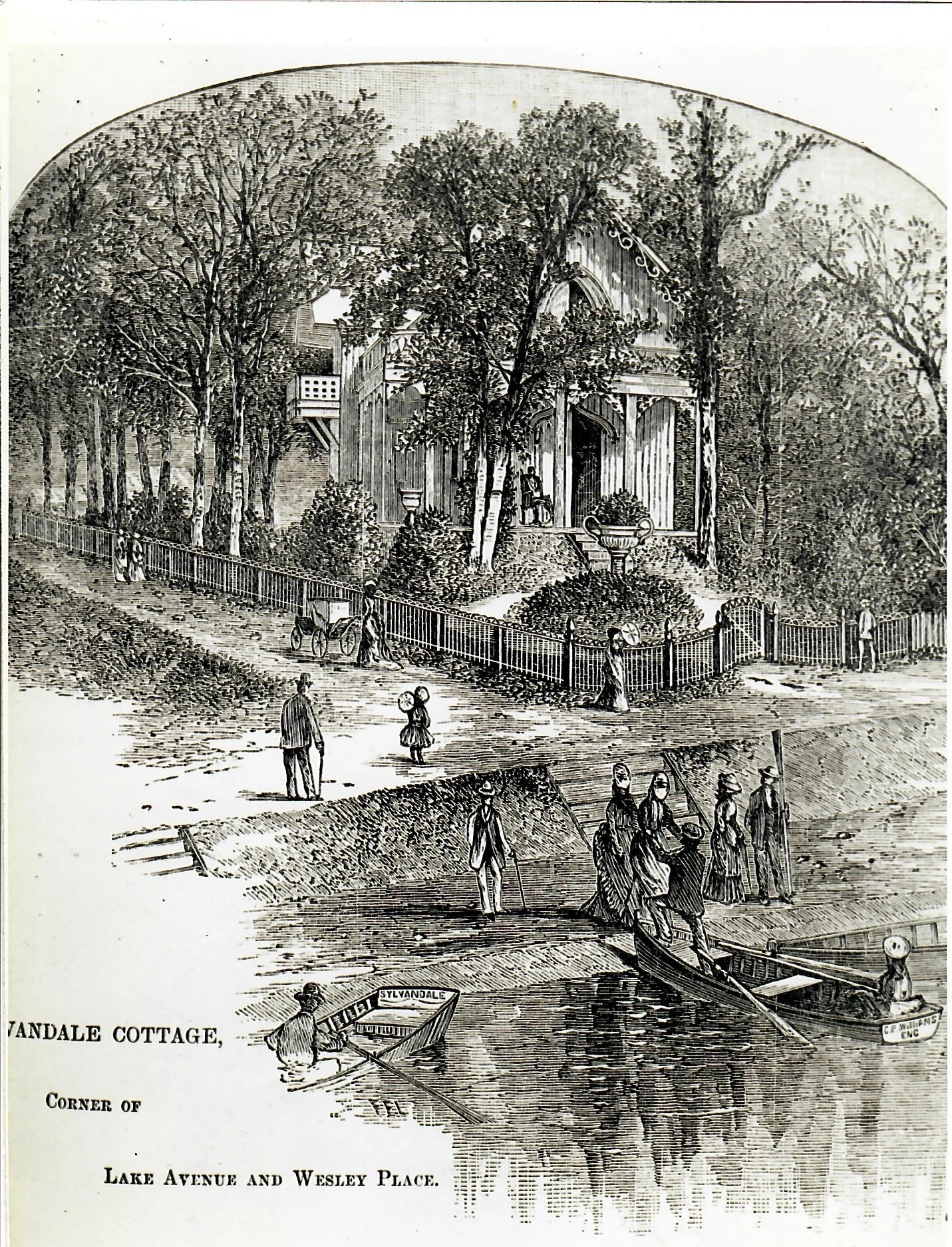
Sylvandale Cottage: Wesley Place & Lake Ave. Home of Dr. Elwood Stokes built in the 1870. In a newspaper from the 1880 it was described as "always a choice spot, is now.. decidedly the prettiest home in the 'twin cities.' On the evening referred to, its parlors; library, bay window extensions, and ample verandahs" in which a congregation was entertained.
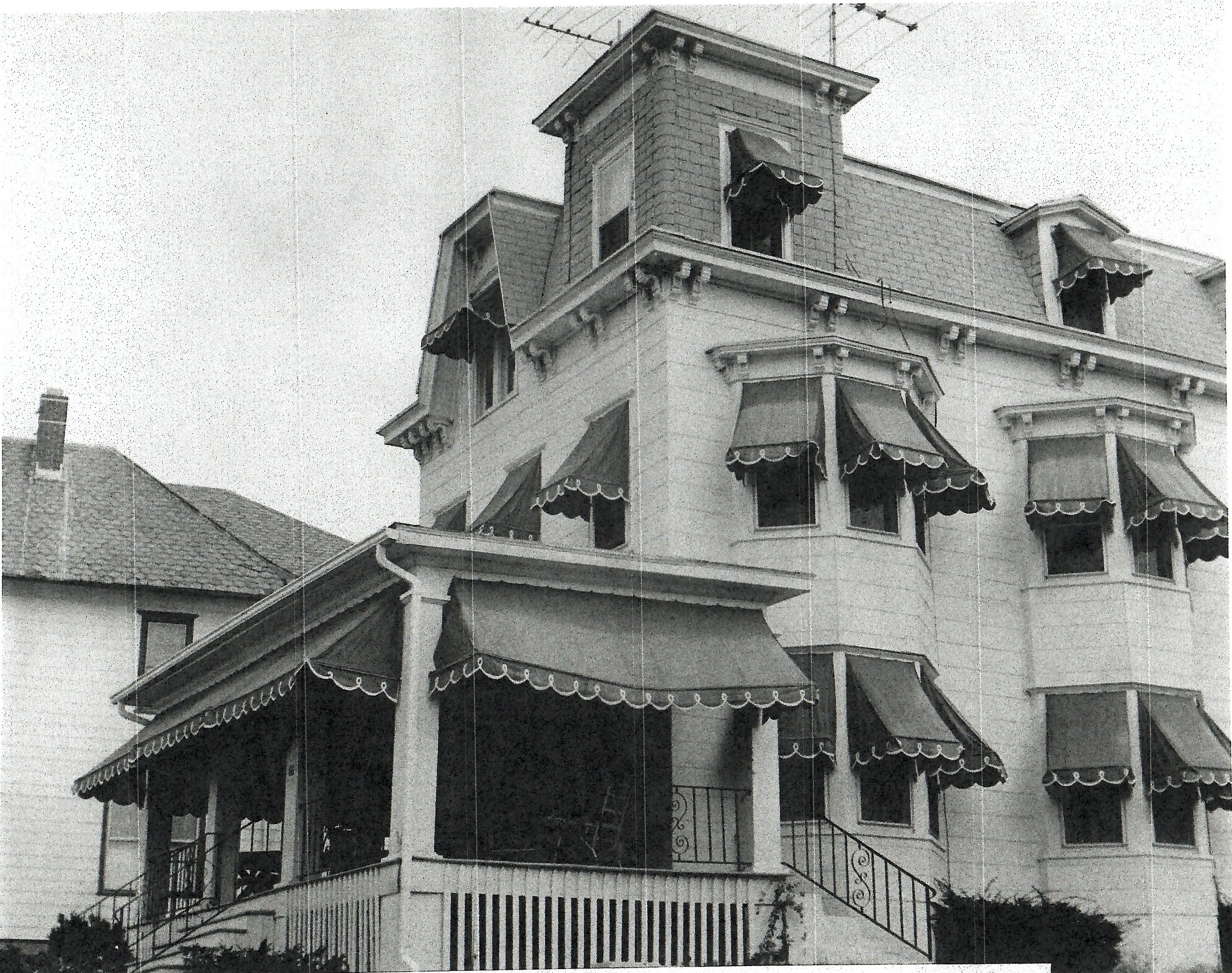
66 Lake Ave (taken during the bicentennial)
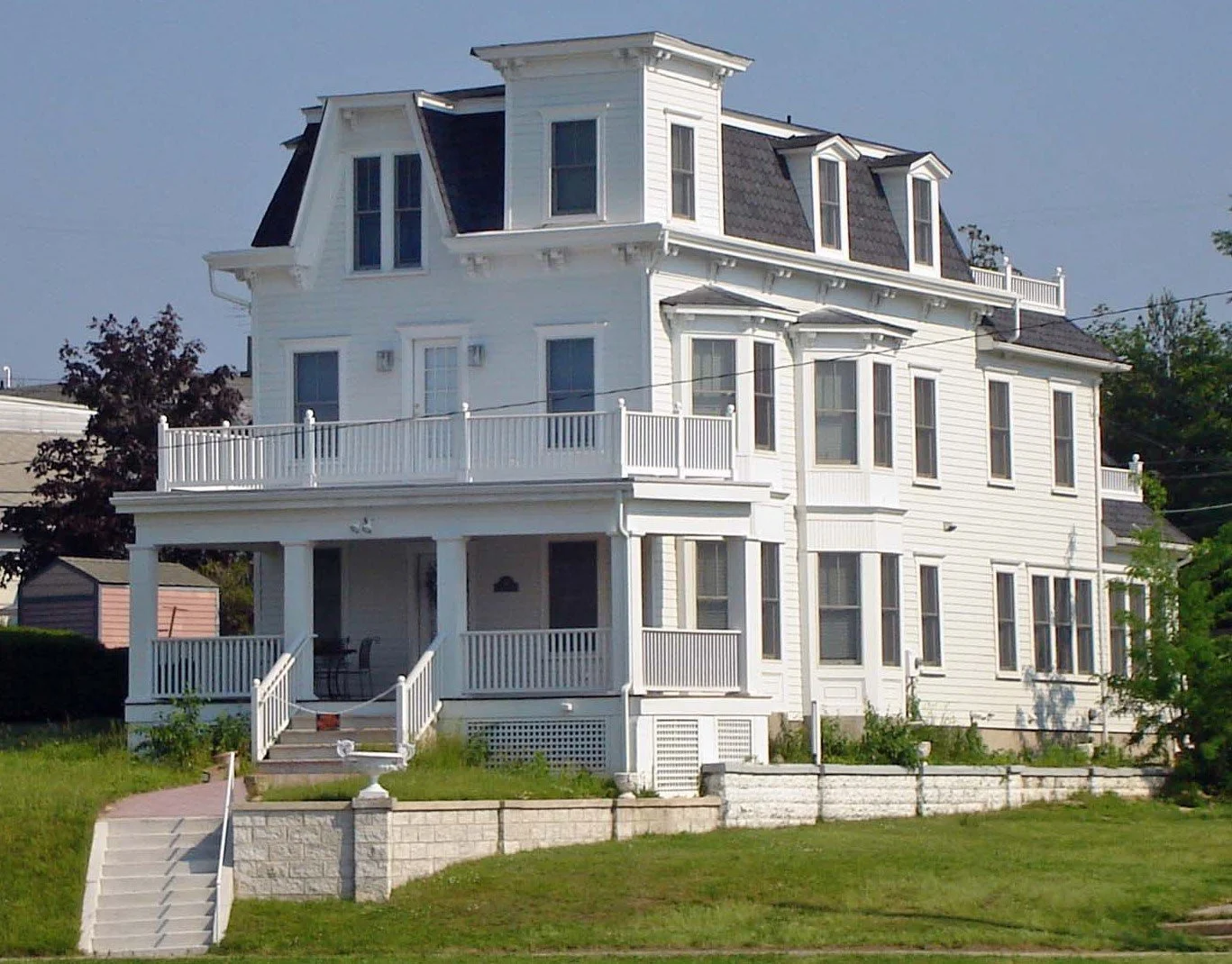
66 Lake Ave (Present Day)
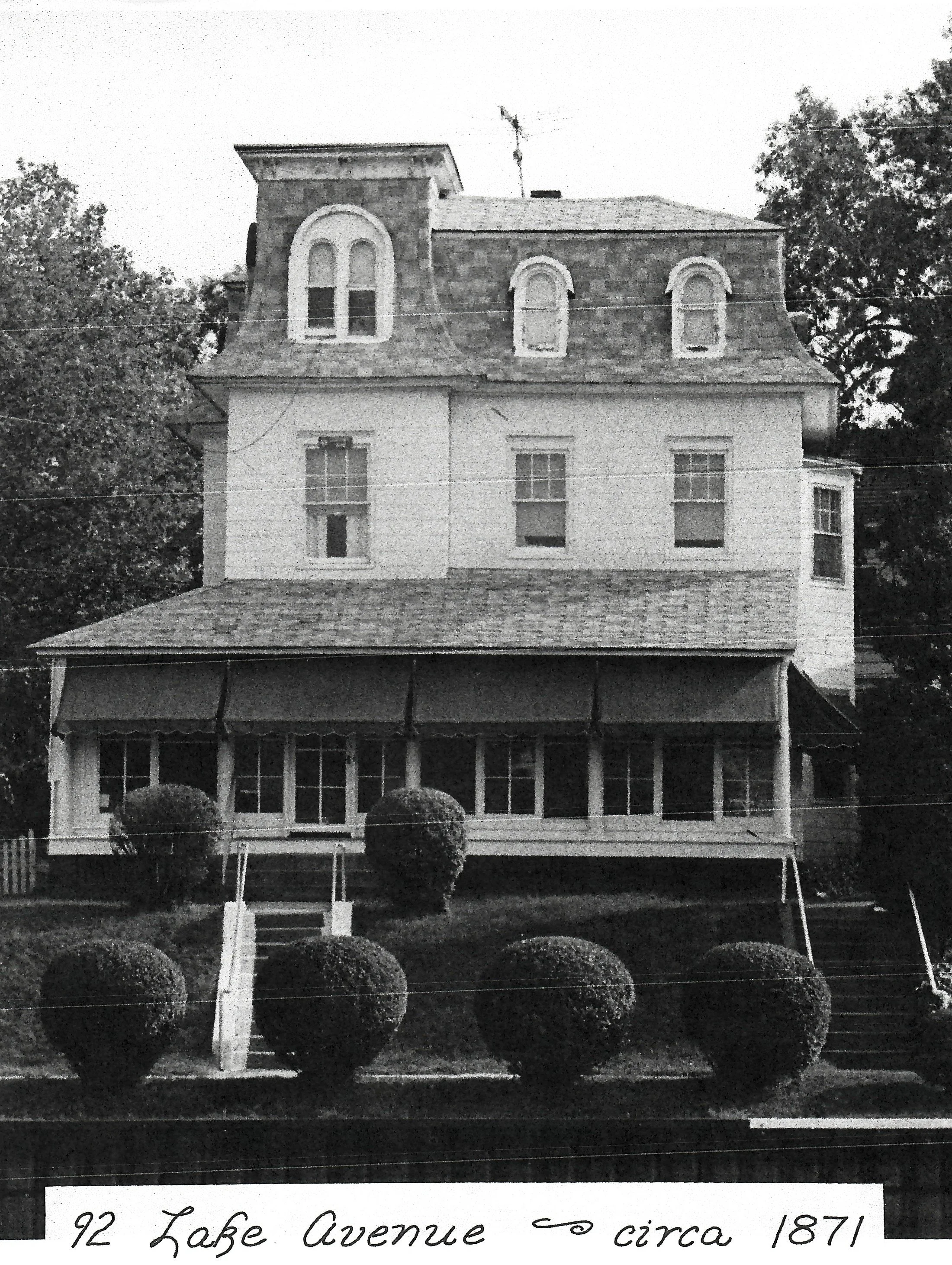
92 Lake Ave "The Lake House" (taken during the bicentennial)
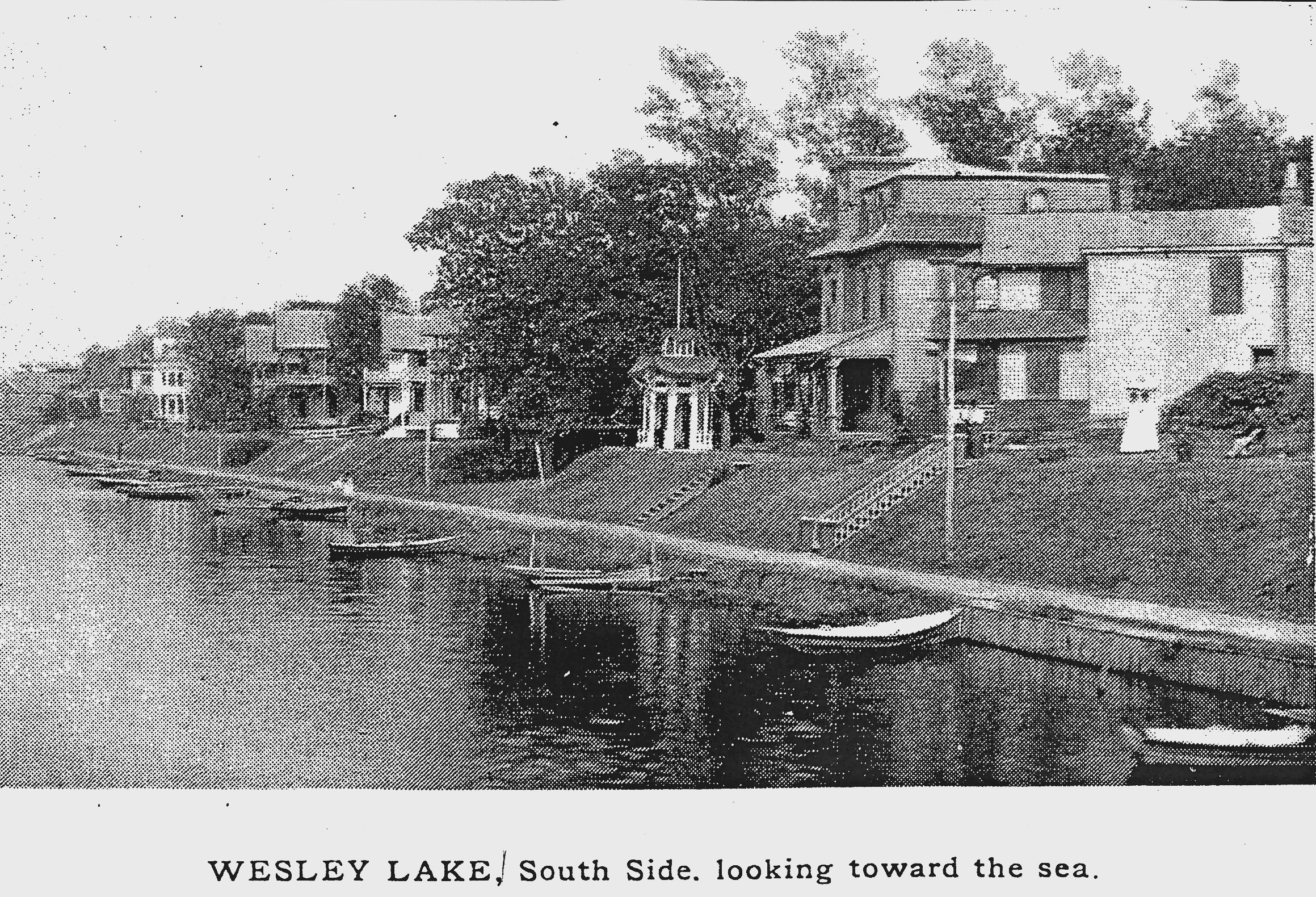
Wesley Lake(circa 1900)
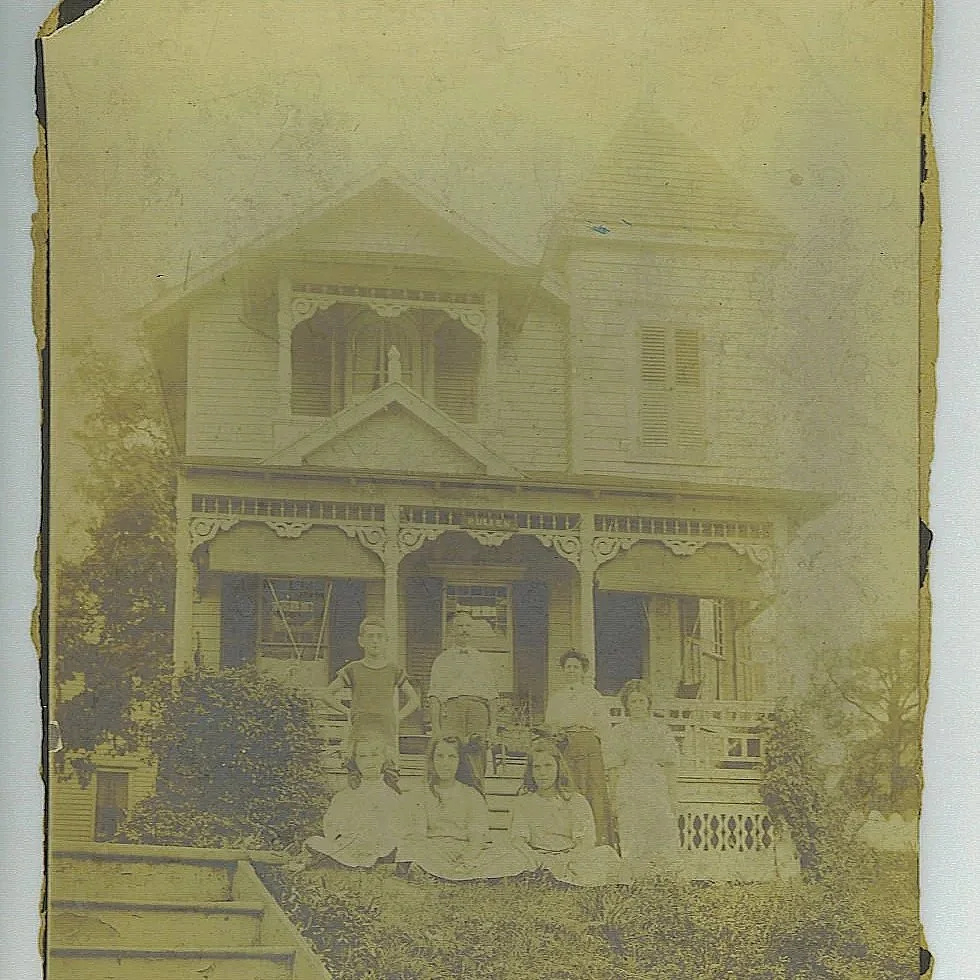
94 Lake Ave (circa 1880s)
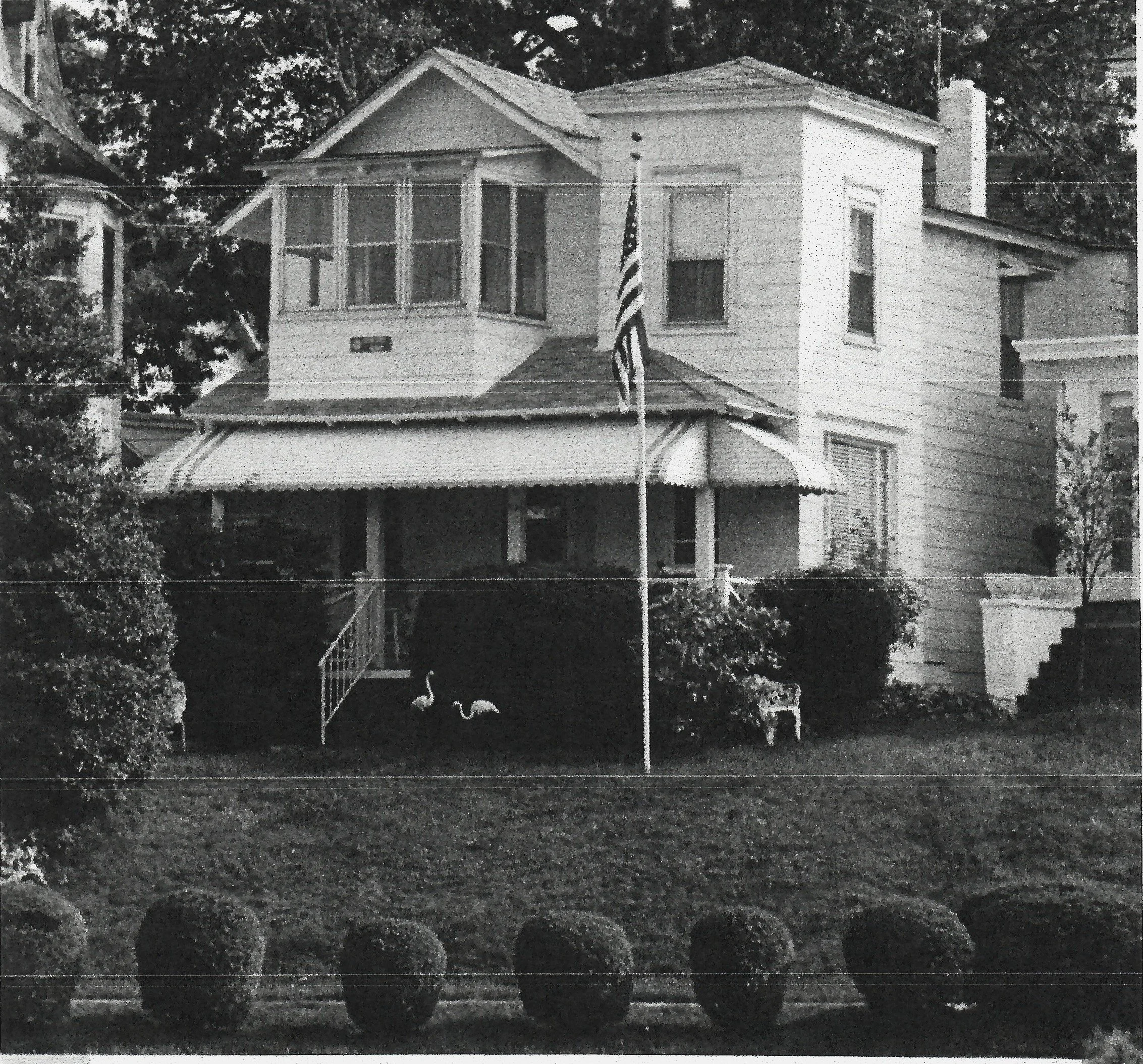
94 Lake Ave (taken during the bicentennial)
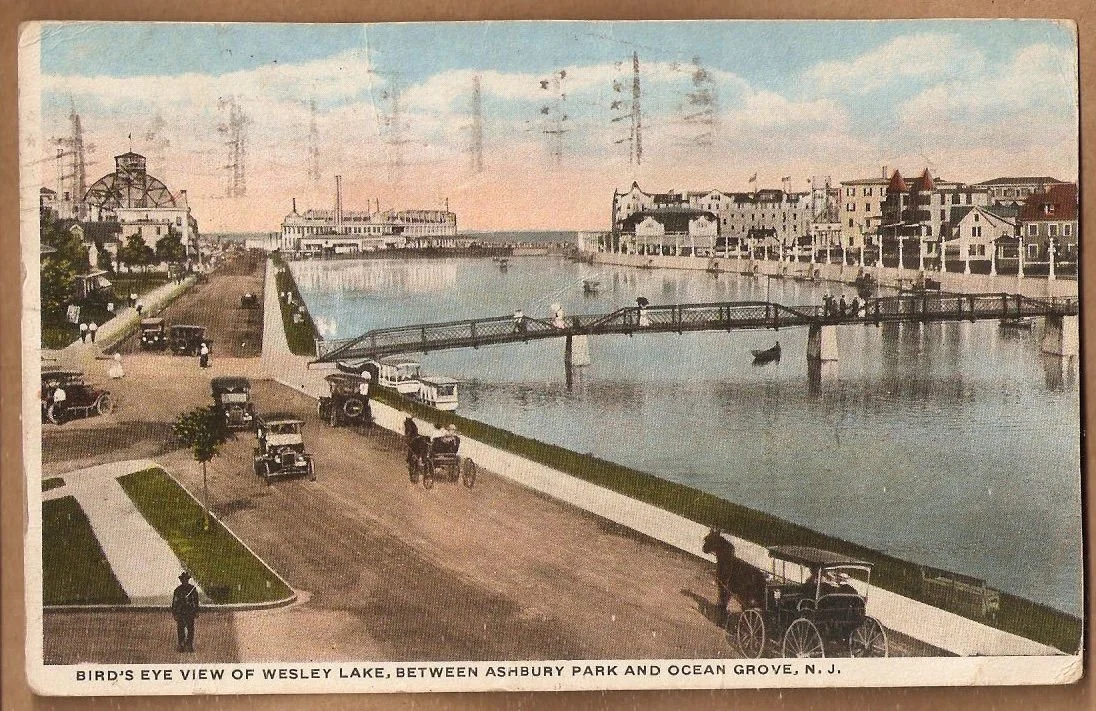
Emory Iron Bridge (1915) Iron footbridges over Wesley Lake were authorized in 1887 to replace overcrowded ferries, built in 1888 as private toll crossings shared by Ocean Grove and James A. Bradley (founder of Asbury Park) and resolved to charge a toll of one cent for each foot passenger from June 1st to September 30th devoted to keeping the bridges and lake in good order and repair.
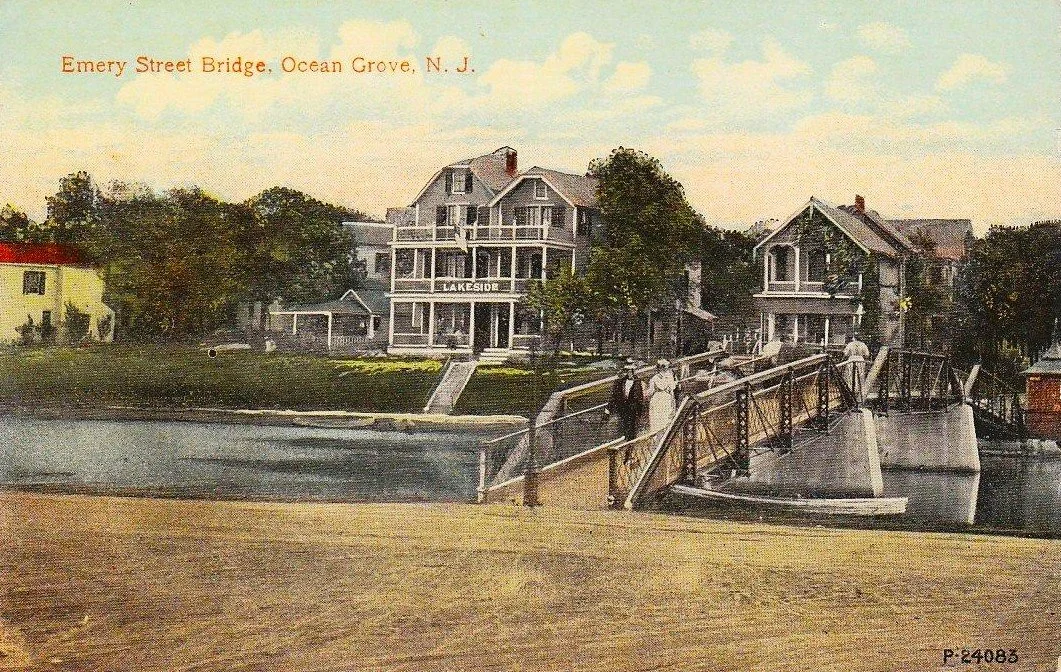
Emory Street Bridge (circa 1900s) The Emory Street (New Jersey Avenue) crossing over Wesley Lake evolved from overcrowded ferries and temporary wooden bridges to an iron footbridge built in 1888, reflecting the growing need for reliable passage between Ocean Grove and Asbury Park. Click to read the full history of these bridges
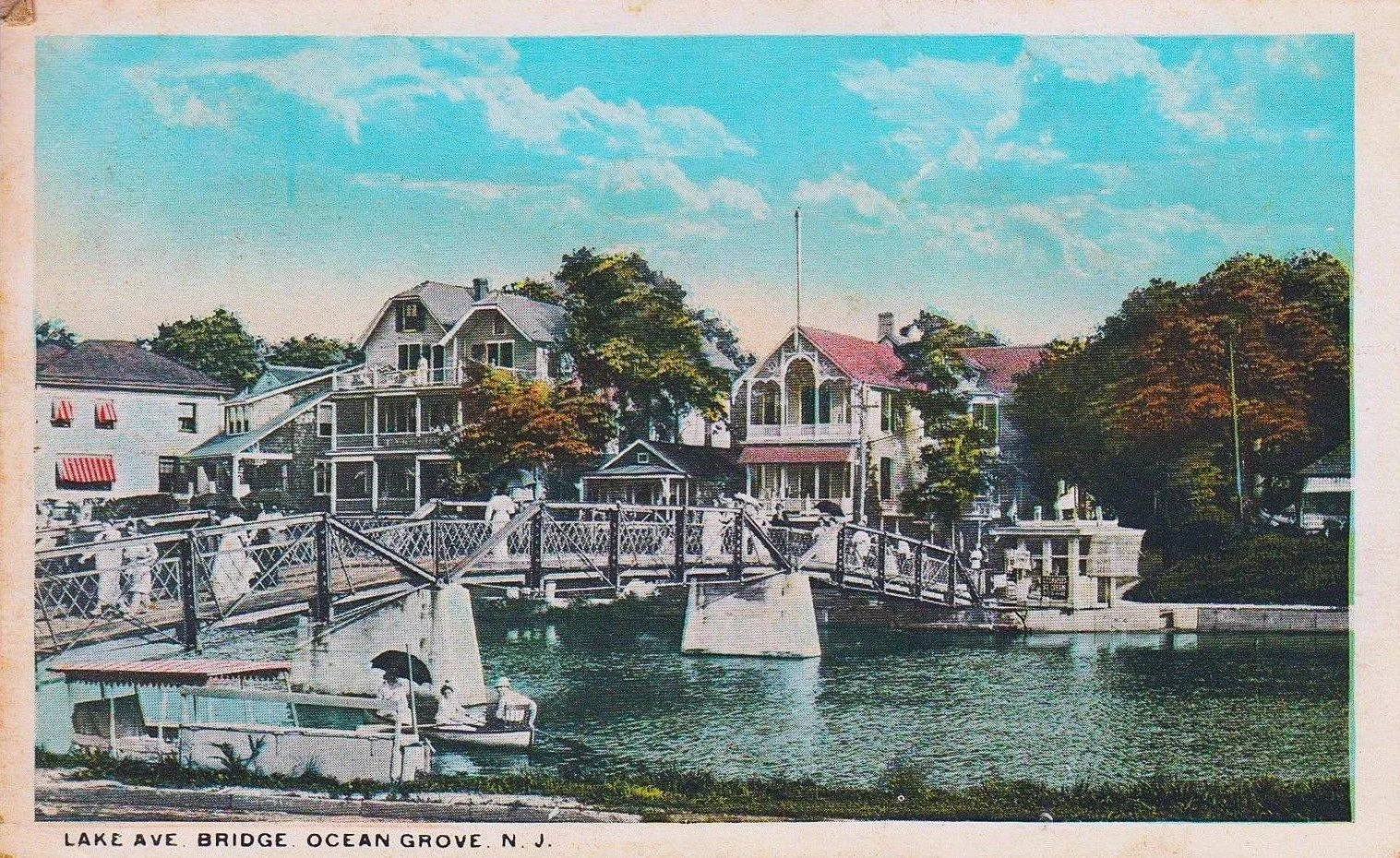
Emory Street Bridge (1919)
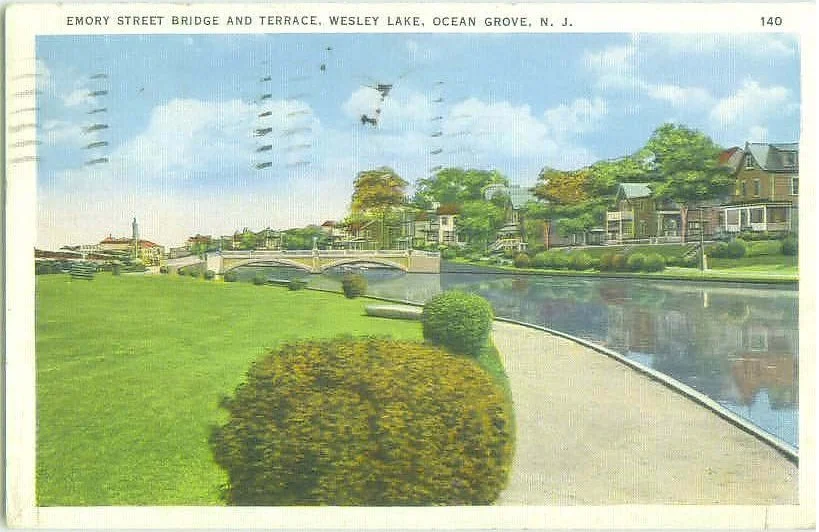
Emory Street Bridge (1938) After decades of use and maintenance concerns, the iron structure was replaced by a new ornamental concrete bridge begun in 1931 and opened in 1932 as part of a jointly funded modernization of the lake crossings.
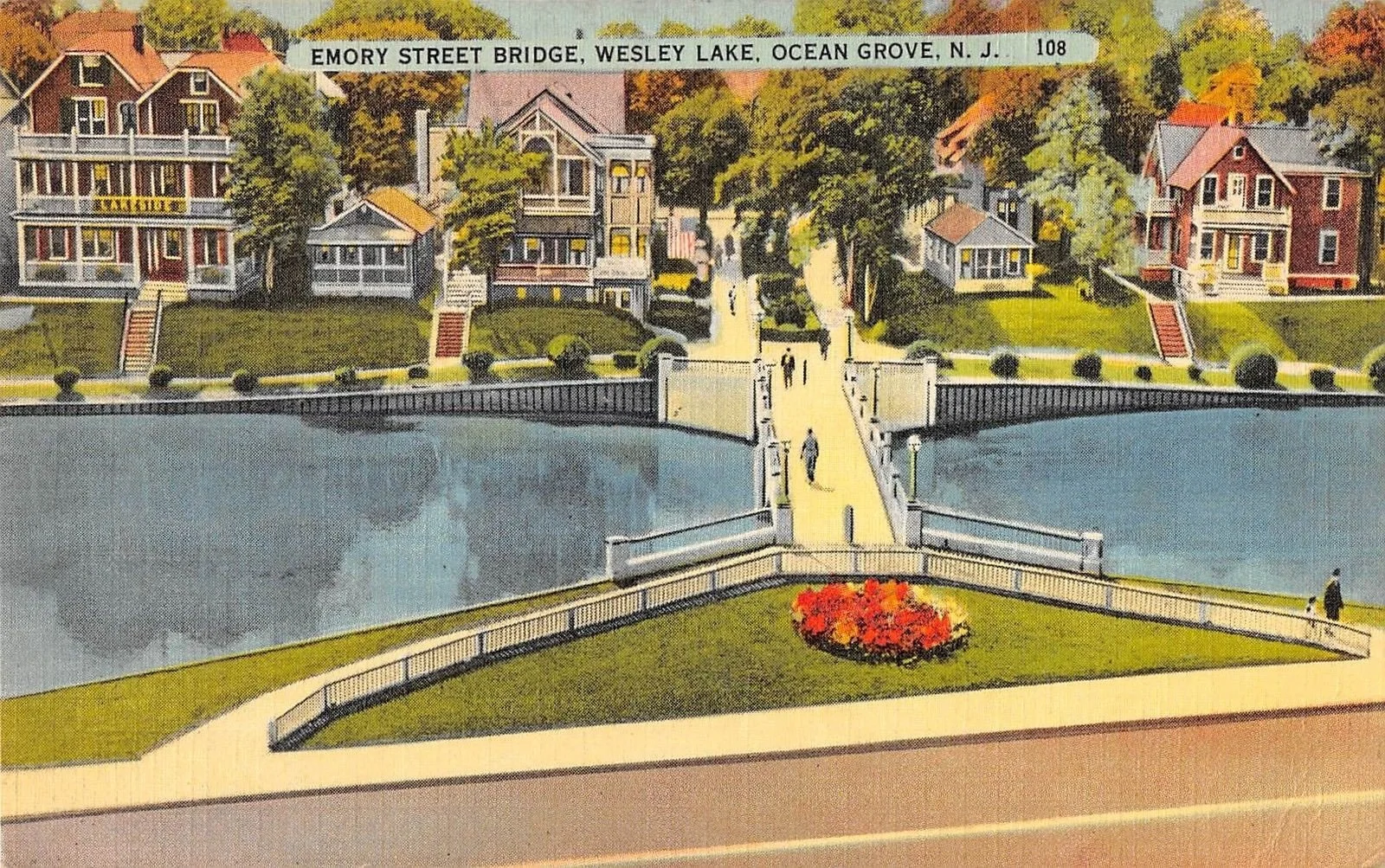
98-108 Lake Ave & Emory Footbridge (1941)
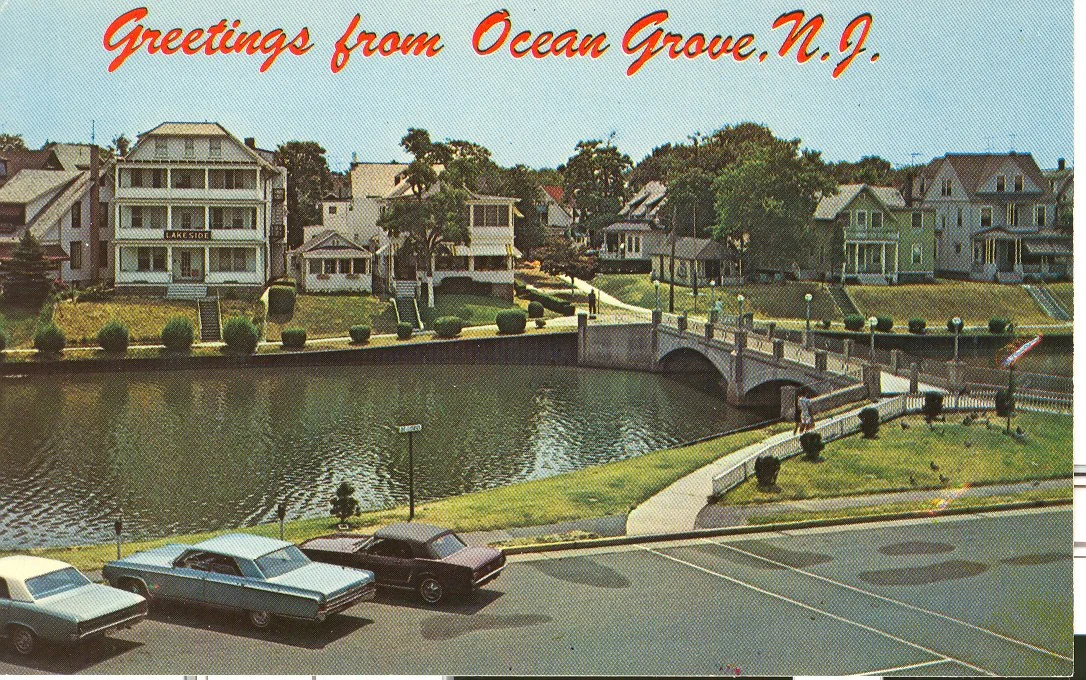
Eastern Footbridge: formerly Emery Street Bridge (1980s)
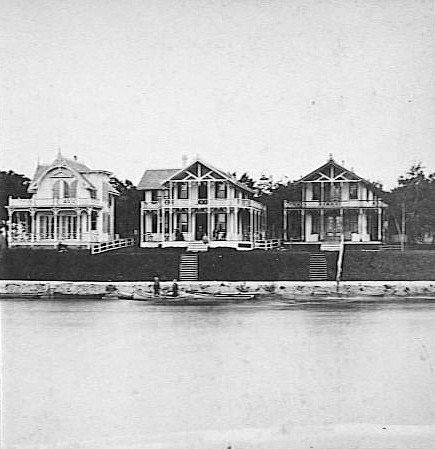
104 -108 Lake Ave (circa 1900s)

104 Lake Ave (1870) Haywards Cottage: The residence of J.K. Hayward was located at the corner of Lake and New Jersey avenues. J.K. Hayward appears in the newspapers to be a vocal member of the community known as a "New York Lawyer," he used his legal acumen to challenge the local religious administration, oscillating between a concerned property owner worried about costs and a legal skeptic who was critical about the town's authority. The lot has been cleared and the the steps lead down to the walk along Wesley Lake.
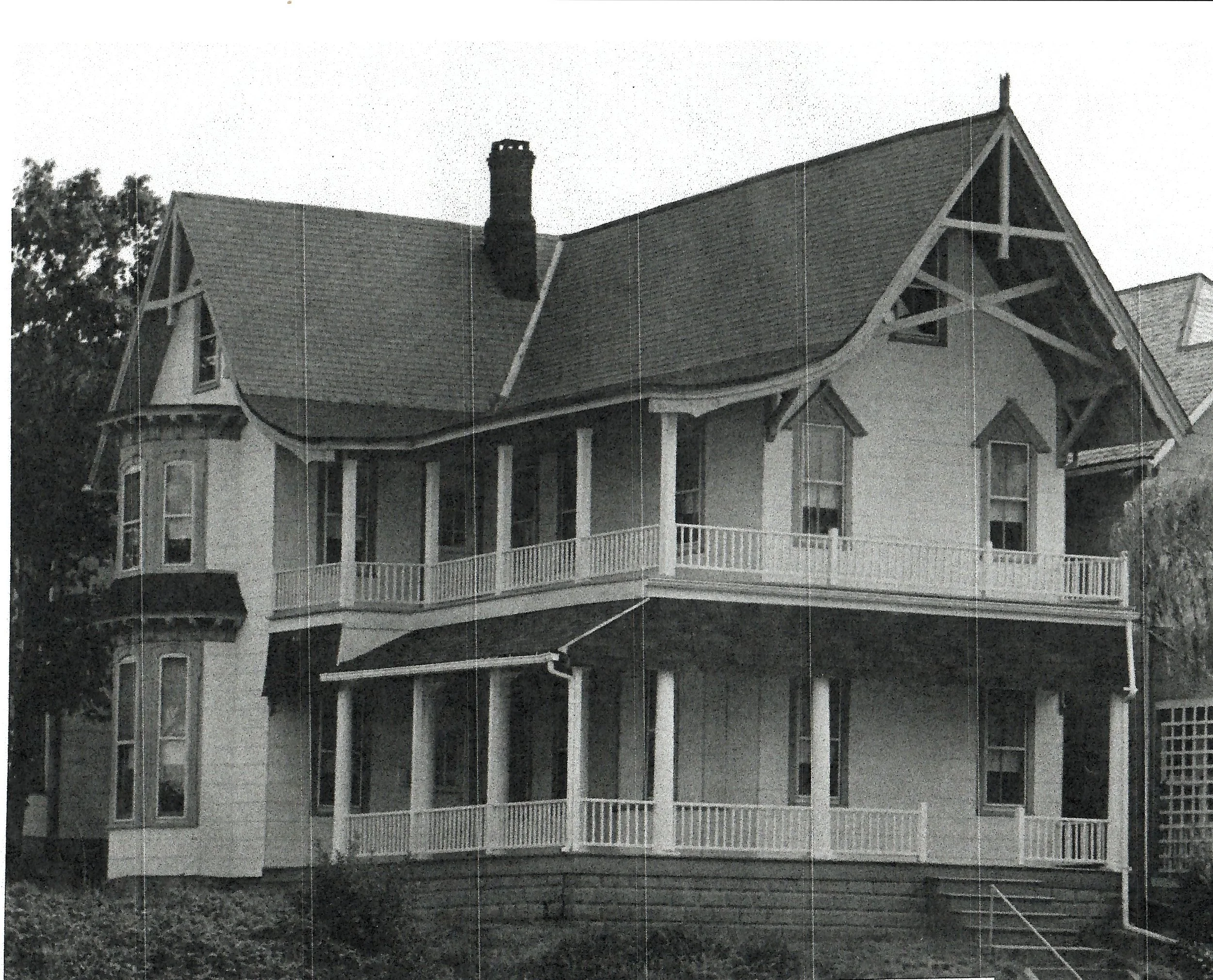
118 Lake Ave (taken during the bicentennial)
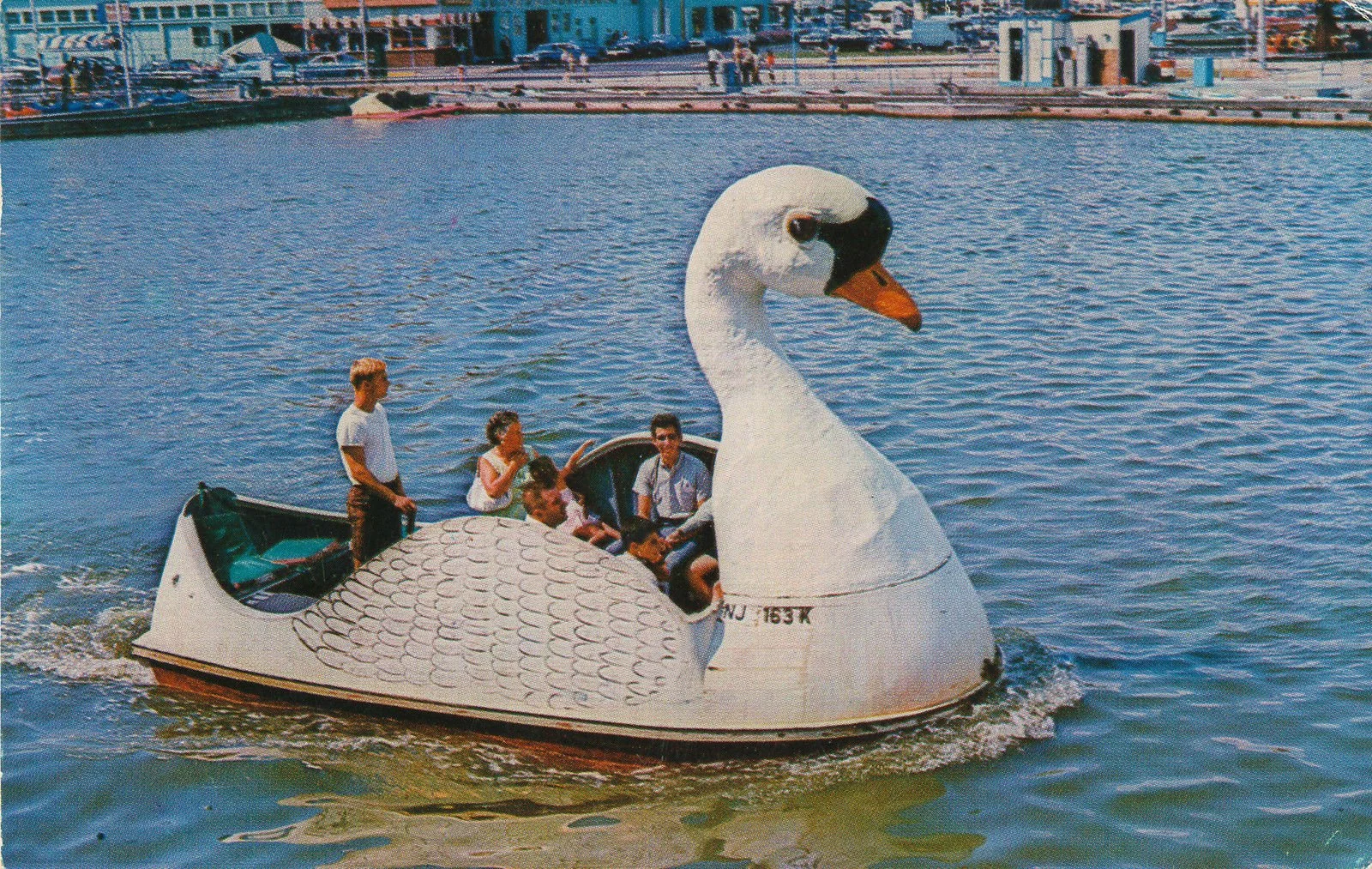
1940 Postcard Swan Boat
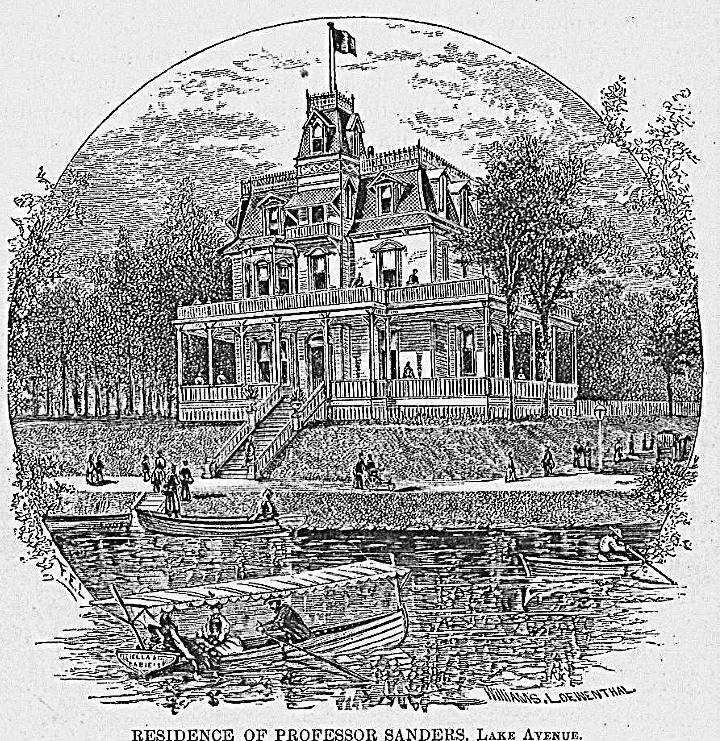
126 Lake Avenue: Sanders Cottage, built in 1877 on multiple lots along Wesley Lake Terrace, was a grand French Second Empire–style residence featuring a Mansard roof, tower, slate coverings, a wraparound porch, and modern amenities such as a gas generating plant. Over the years, it served as a prominent private home and boarding house, hosted community gatherings, and was eventually embroiled in a lease dispute with the Ocean Grove Association that was settled in 1905, returning the property to the Association’s control. (Click the image to read about the house, its residents and to see what it looks like today)
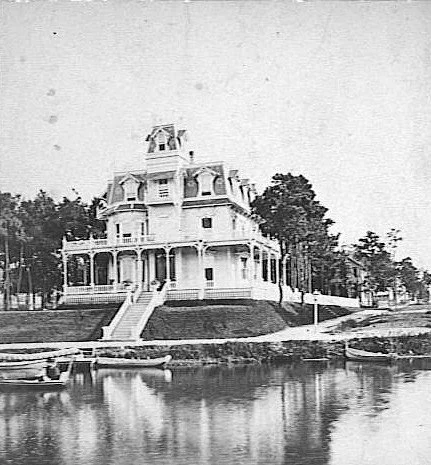
126 Lake Avenue: Sanders Cottage (1880s) Over the years, it served as a prominent private home and boarding house, hosted community gatherings, and was eventually embroiled in a lease dispute with the Ocean Grove Association that was settled in 1905, returning the property to the Association’s control. (Click the image to read about the house, its residents and to see what it looks like today)
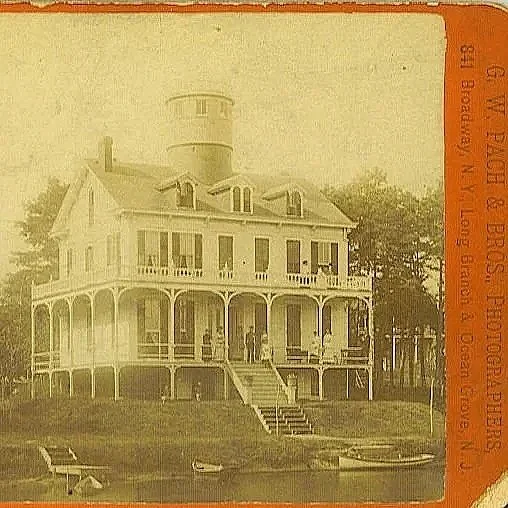
128 Lake Ave (circa 1880s) Rogers Cottage, built in 1880 by engineer Ethan Rogers on Lake Avenue, featured a distinctive revolving observatory tower with a telescope, offering expansive views of Wesley Lake, the Atlantic, and surrounding New Jersey hills, though the tower was removed by 1908. (Click on the image to read more about this home's history & its residents)
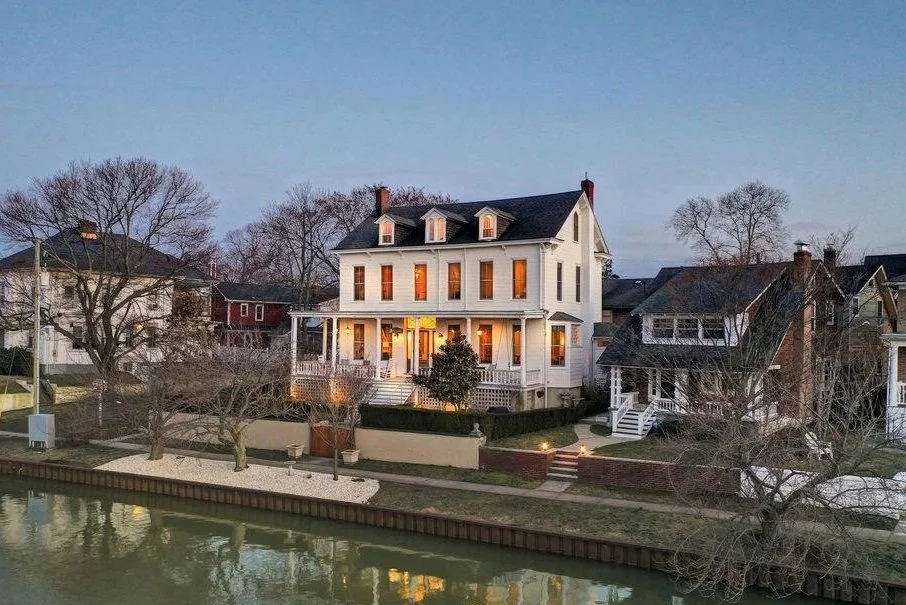
128 Lake Ave: Rogers Cottage: Originally constructed with few decorative embellishments, the house occupied a commanding bluff opposite Sanders Cottage and became a local landmark. Unfortunately, The Rogers family’s time in their Ocean Grove home was brief, as Ethan’s first wife died soon after its completion, he remarried in 1882, and Ethan himself suffered a paralytic stroke and died in 1883. (Click on the image to read more about this home's history & its residents)
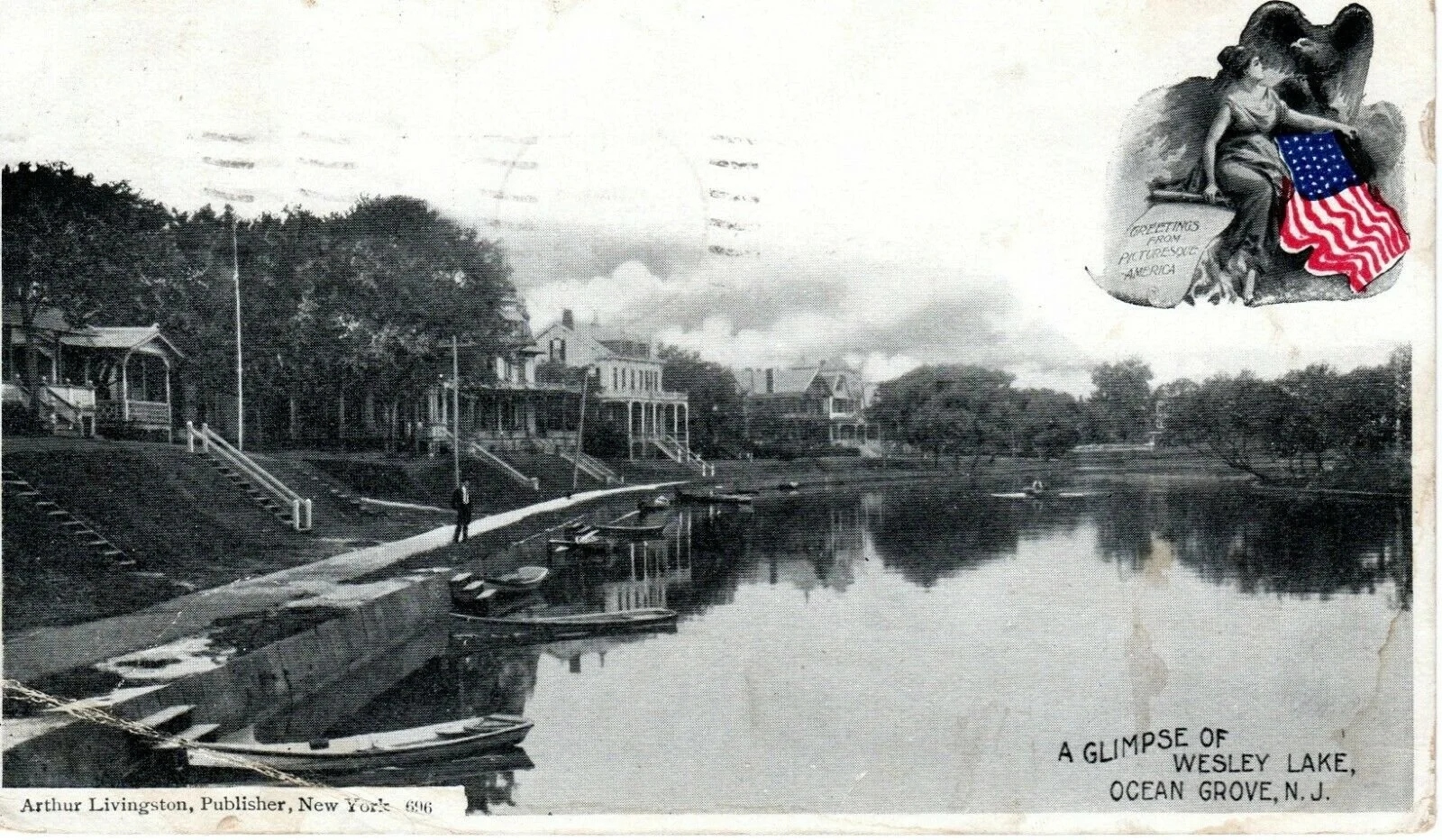
Wesley Lake & Homes (1905)
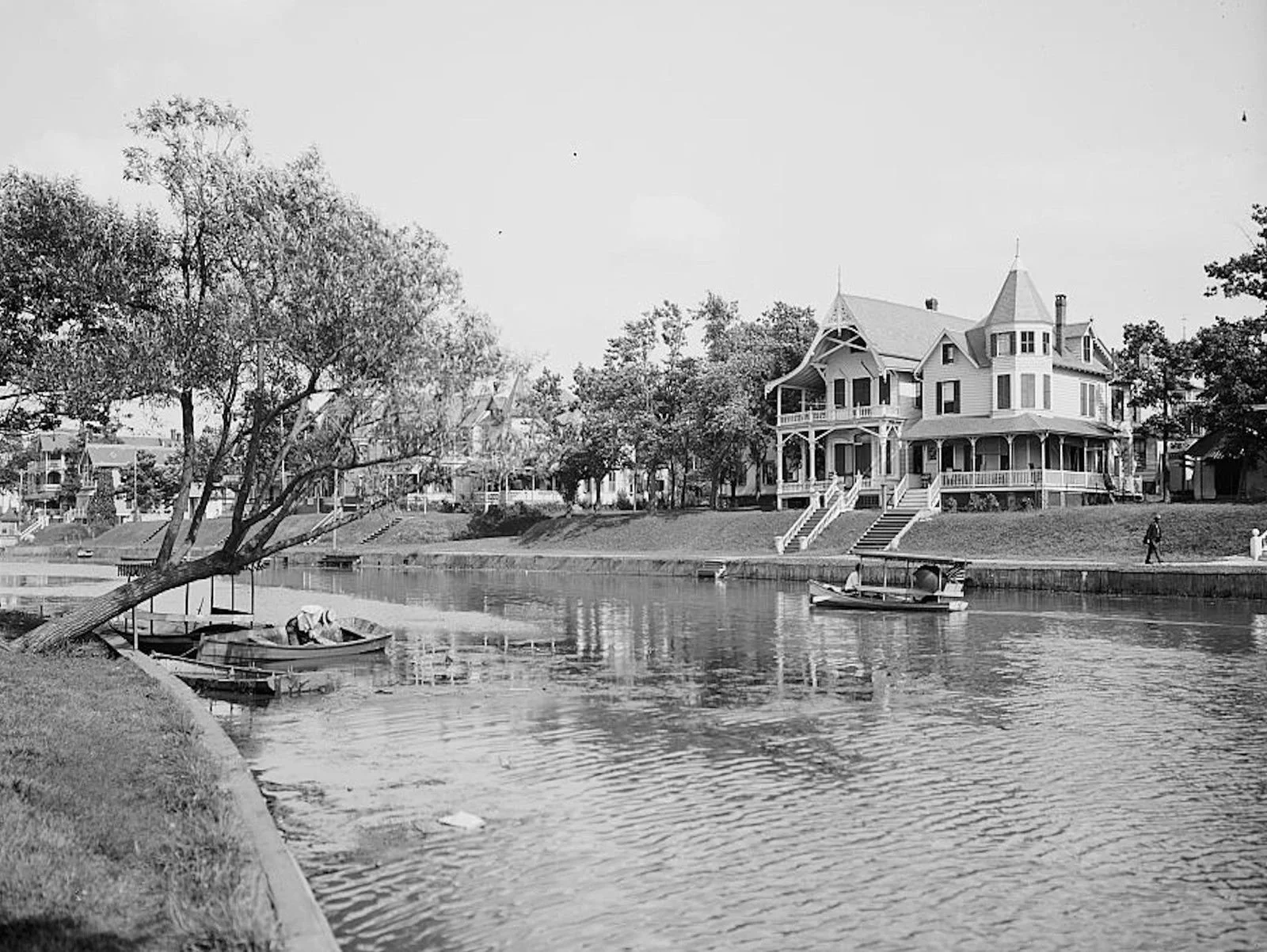
118 & 120 Lake Ave (1905)
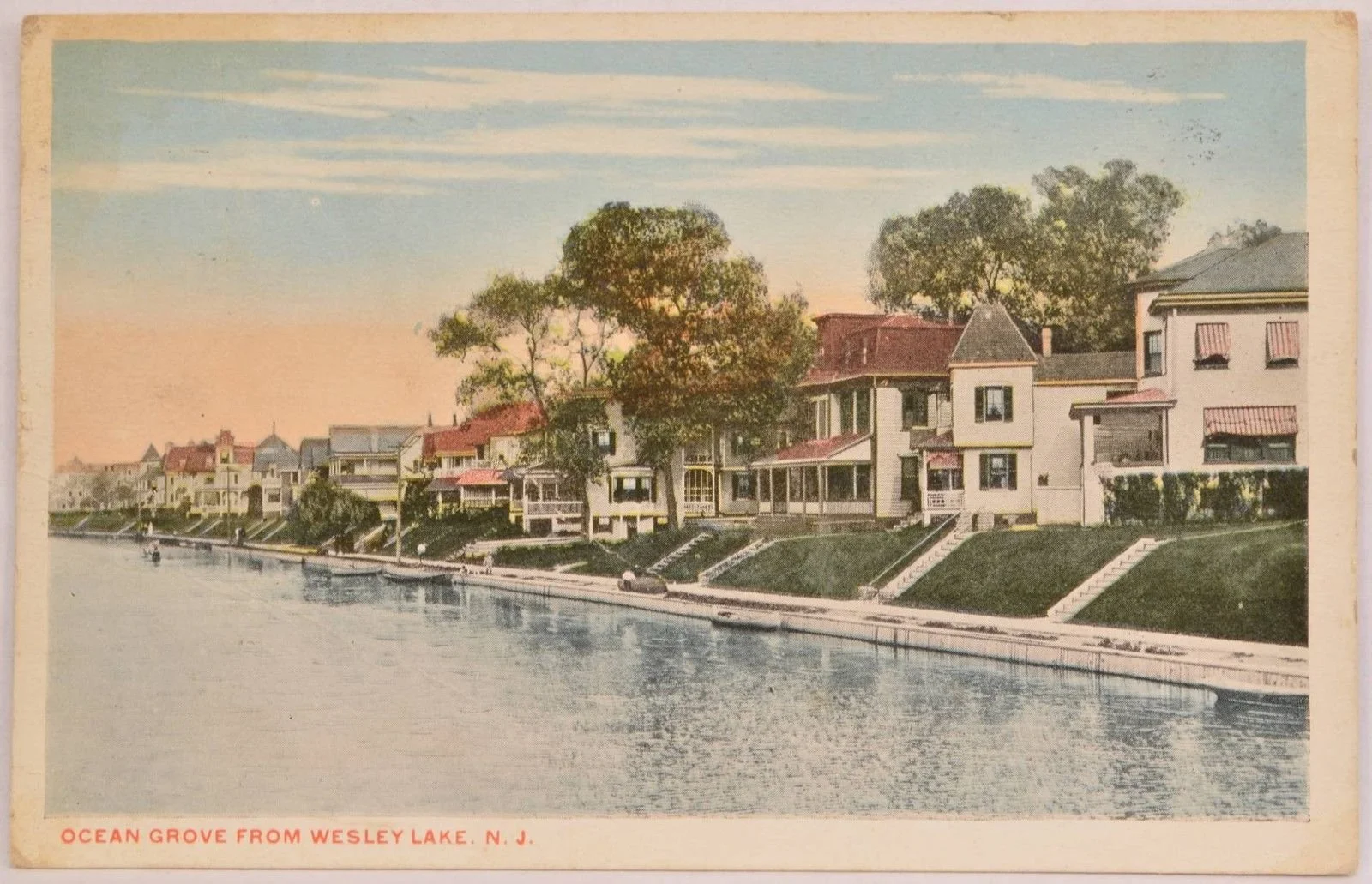
Wesley Lake (1916)
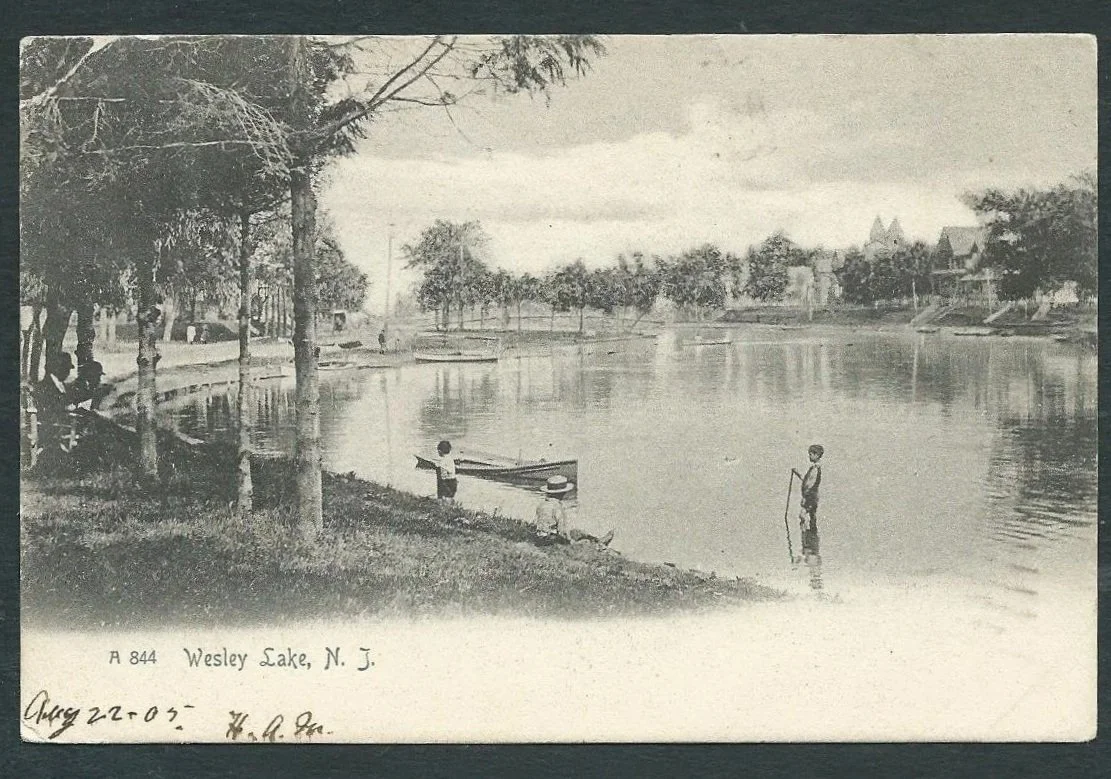
Wesley Lake & McKendrie Park (1905)
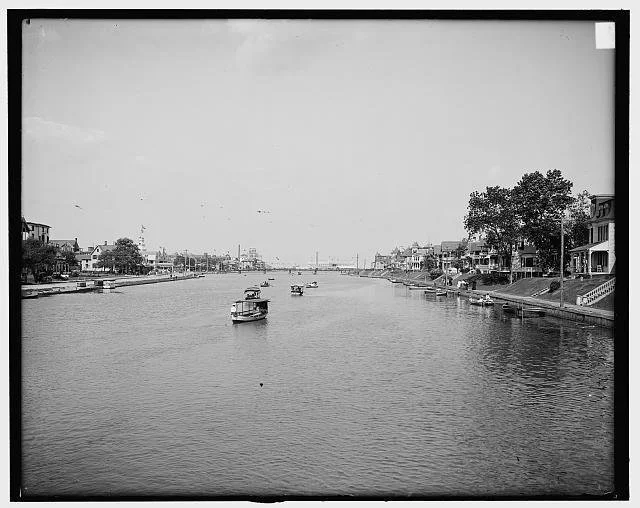
Wesley Lake (1905) Read about the history & troubled waters of Wesley Lake by clicking on the image.
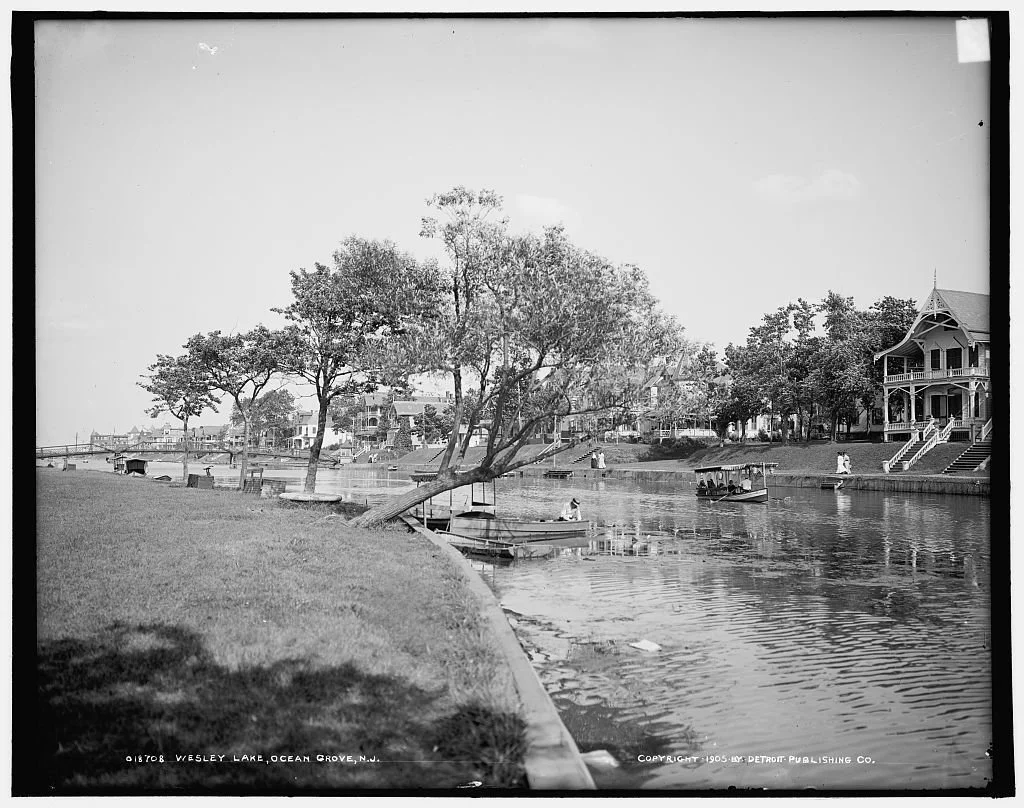
118 Lake Ave & Wesley Lake (1905)
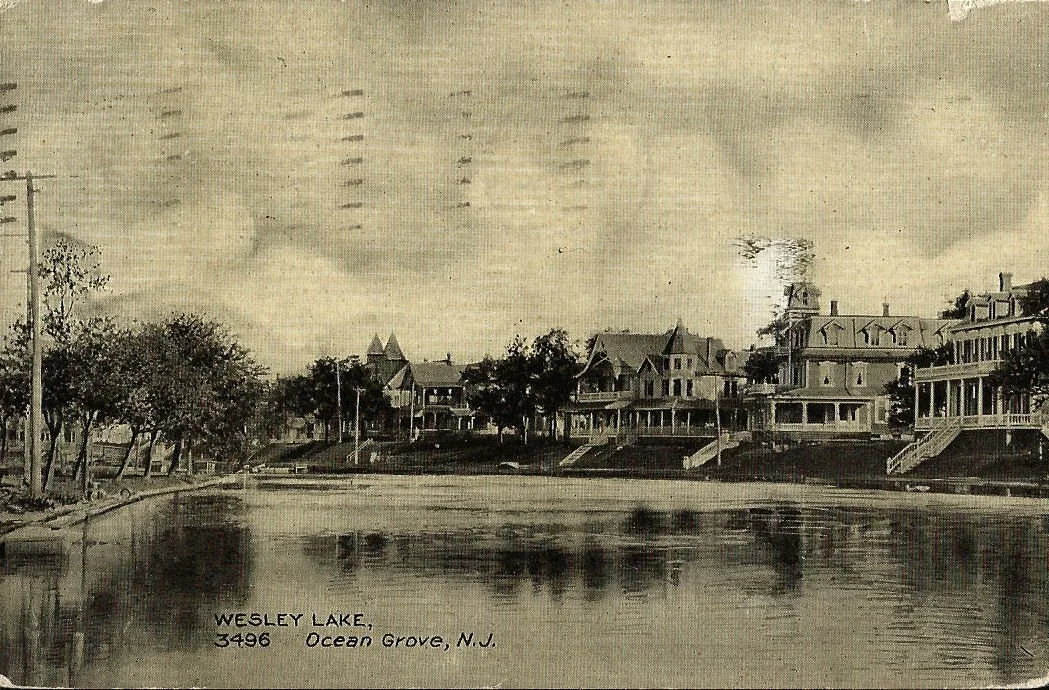
Wesley Lake Homes (1908)
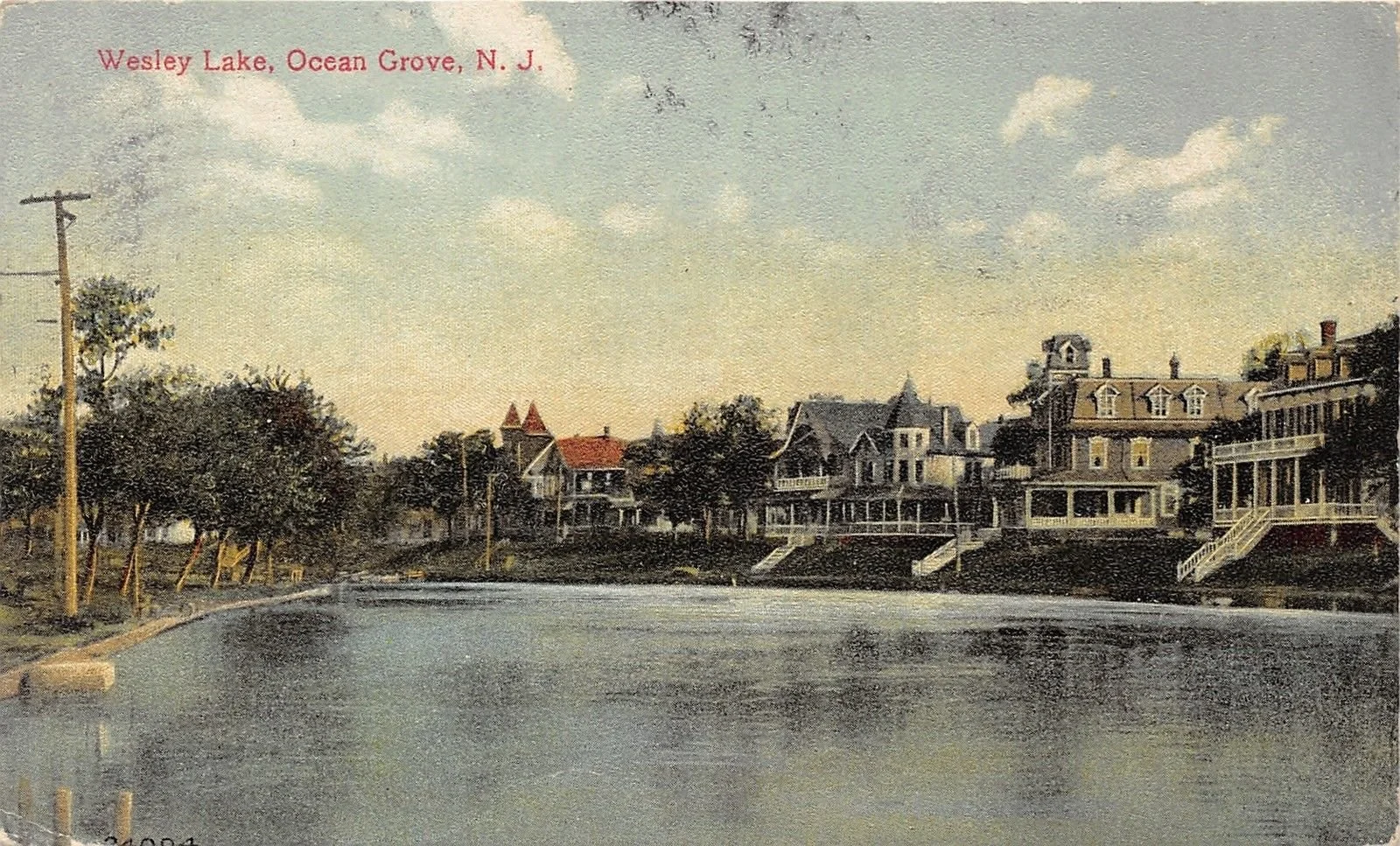
Wesley Lake Homes (1908)
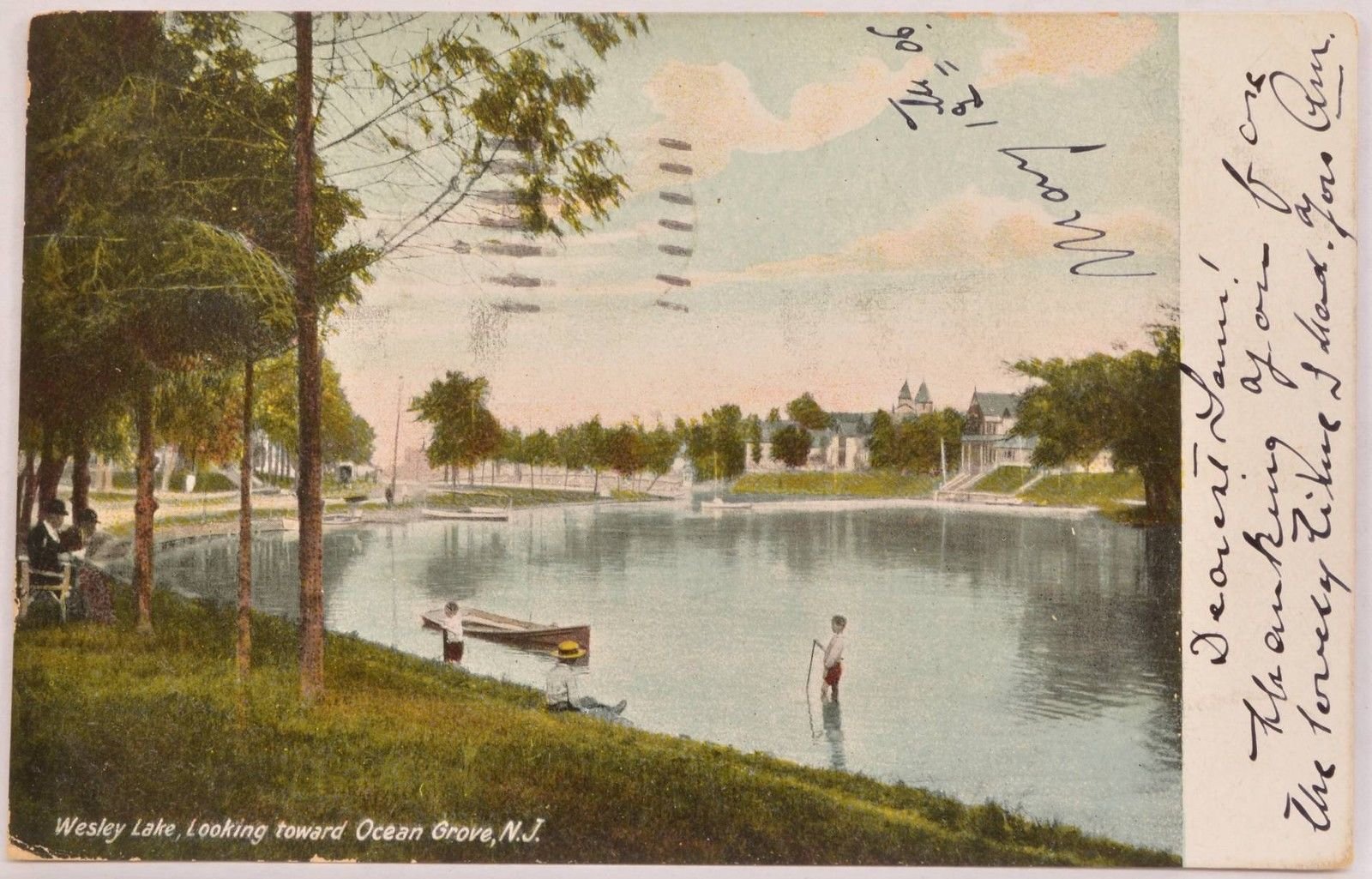
Wesley Lake (1907)
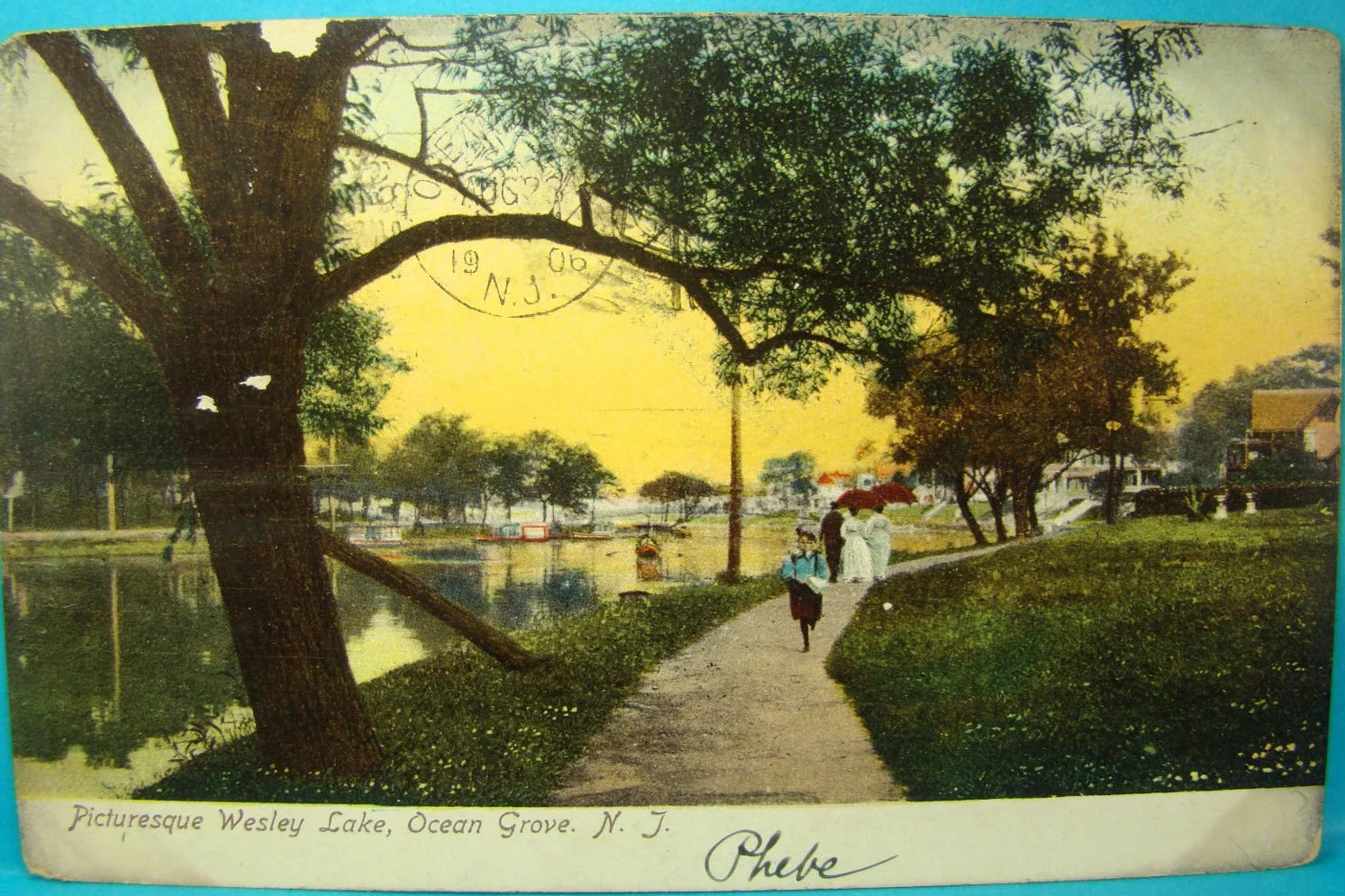
Wesley Lake (1906)
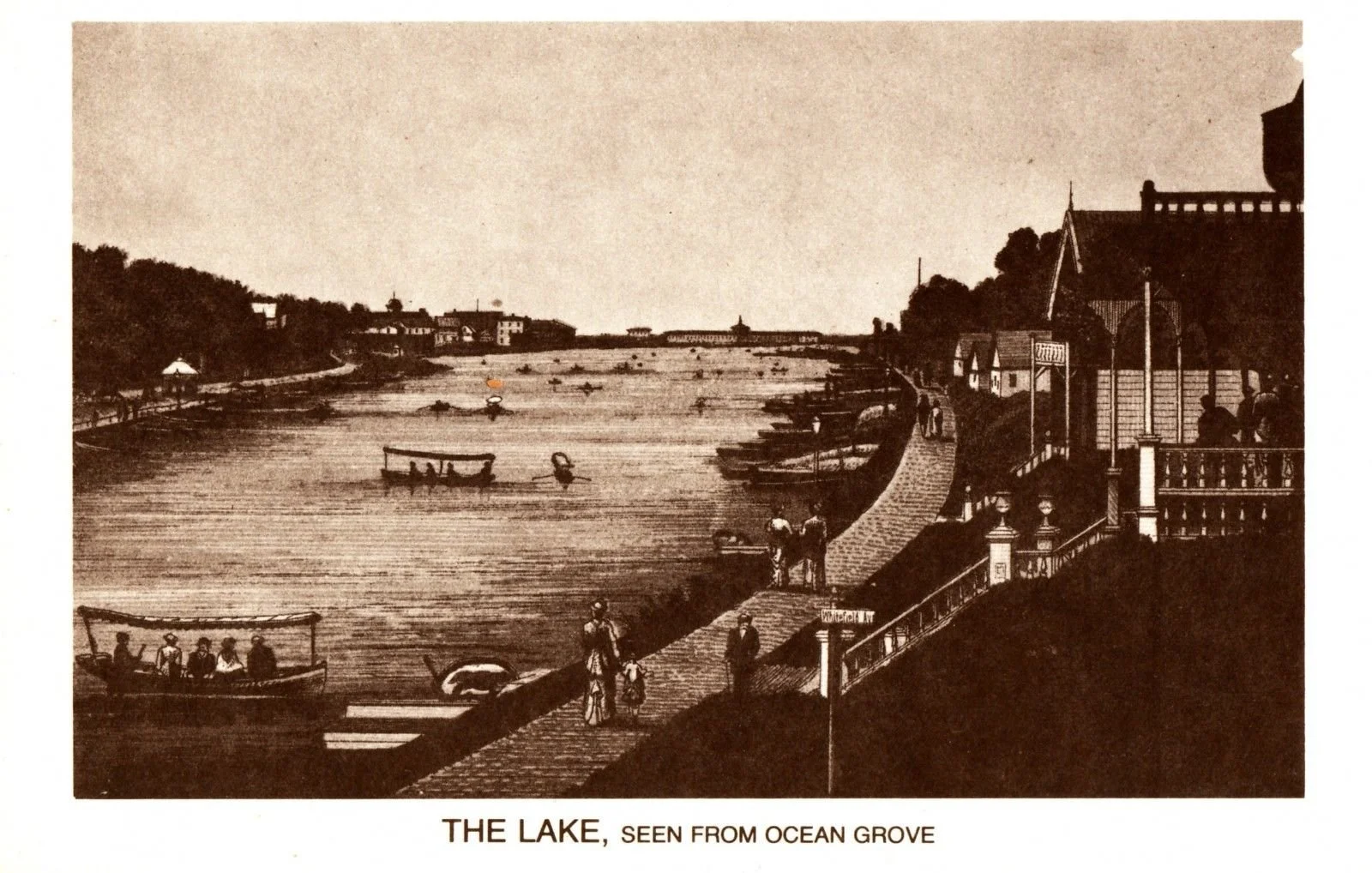
Wesley Lake view from McKendrie Park (1870-1898)
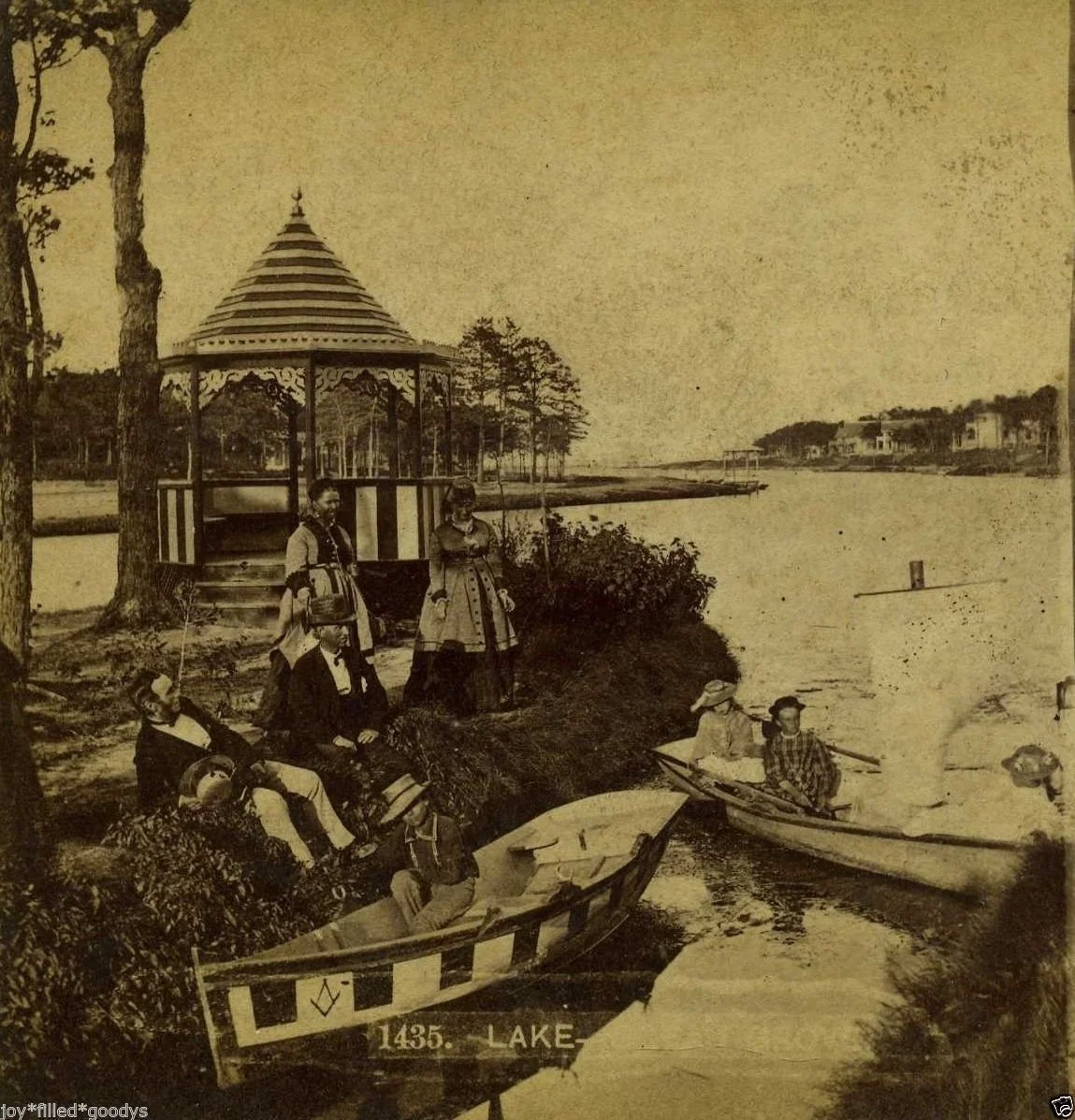
"Fairy Island" view McKendrie Park(1860)
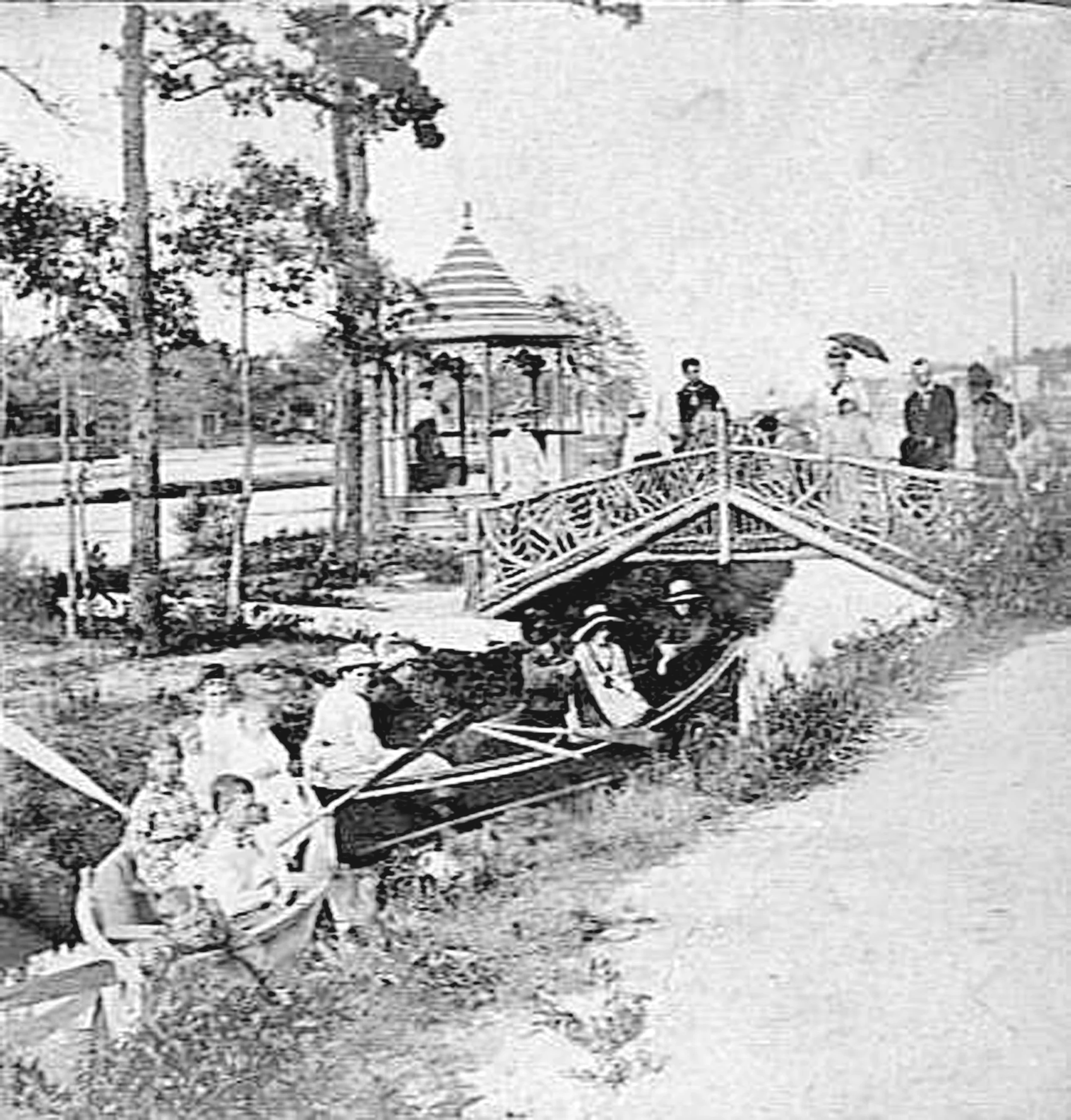
"Fairy Island", a small and frequently photographed feature at the head of Wesley Lake, was reached by a rustic wooden bridge with a gazebo and served as a quiet destination especially for "moonlit lovers" until it was removed in 1929 to improve water flow, reduce sediment buildup, and aid ongoing efforts to clean and deepen the lake.
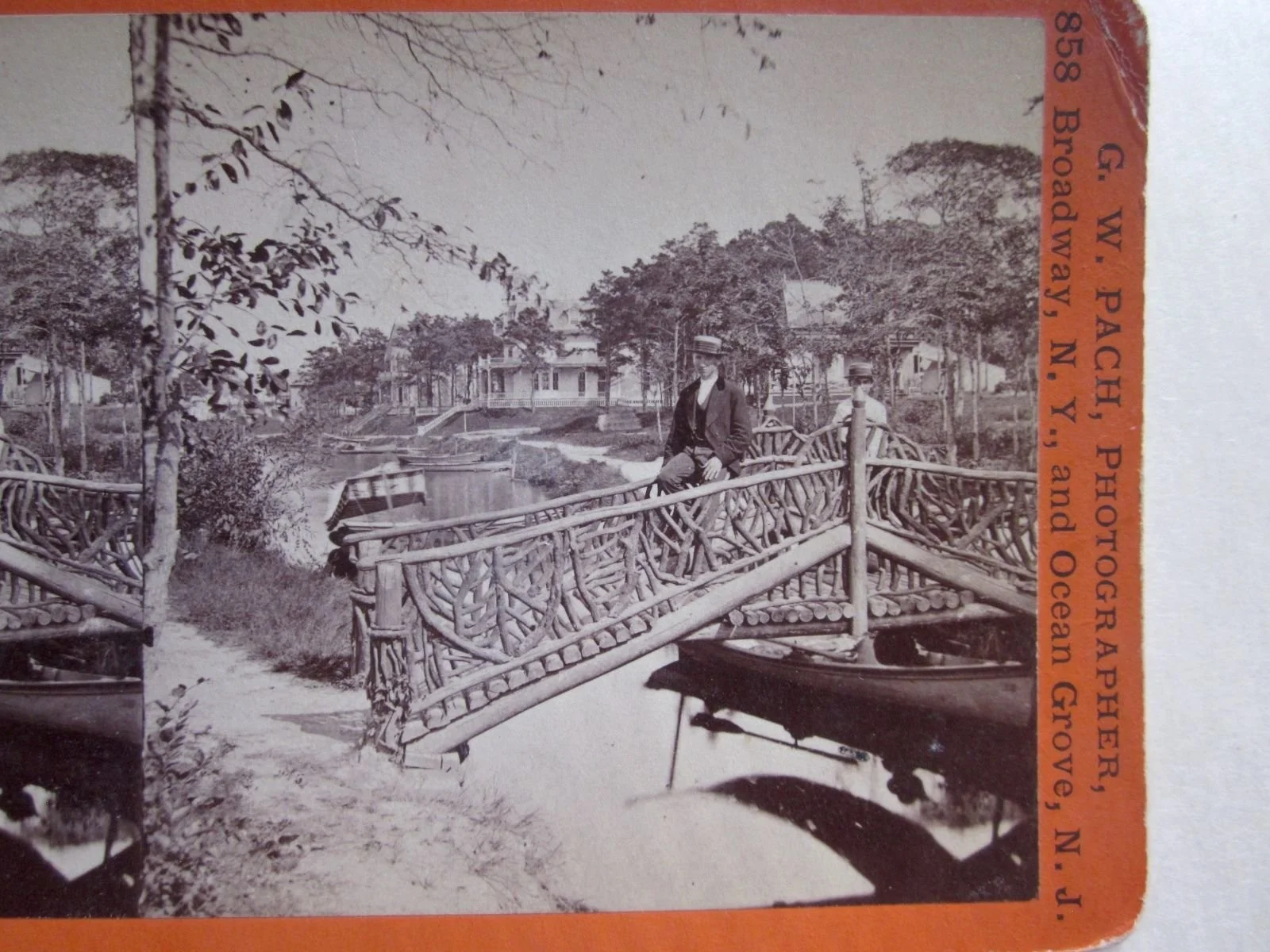
Fairy Island Bridge (1890).
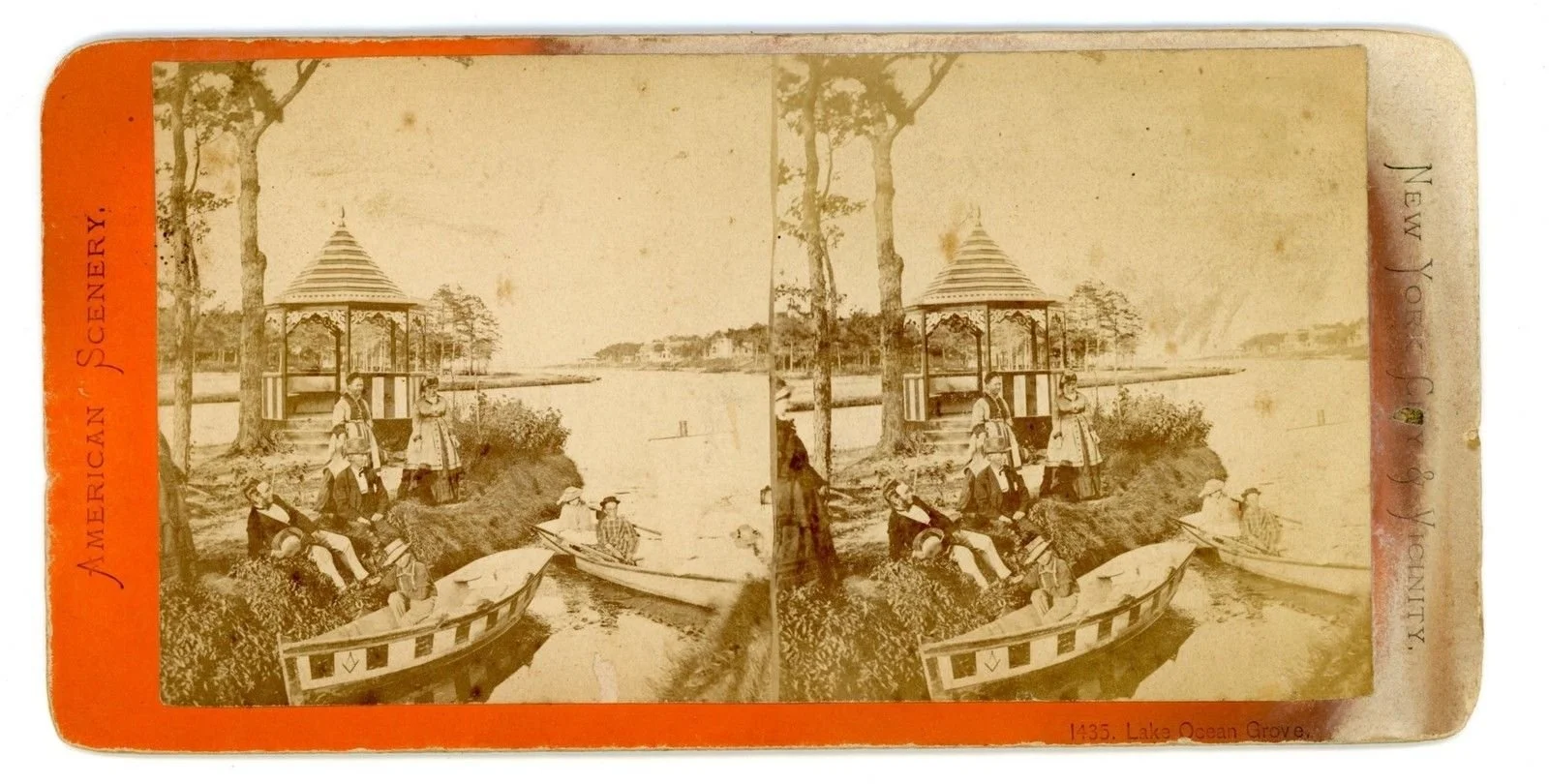
Pagoda on Wesley Lake (1870s)
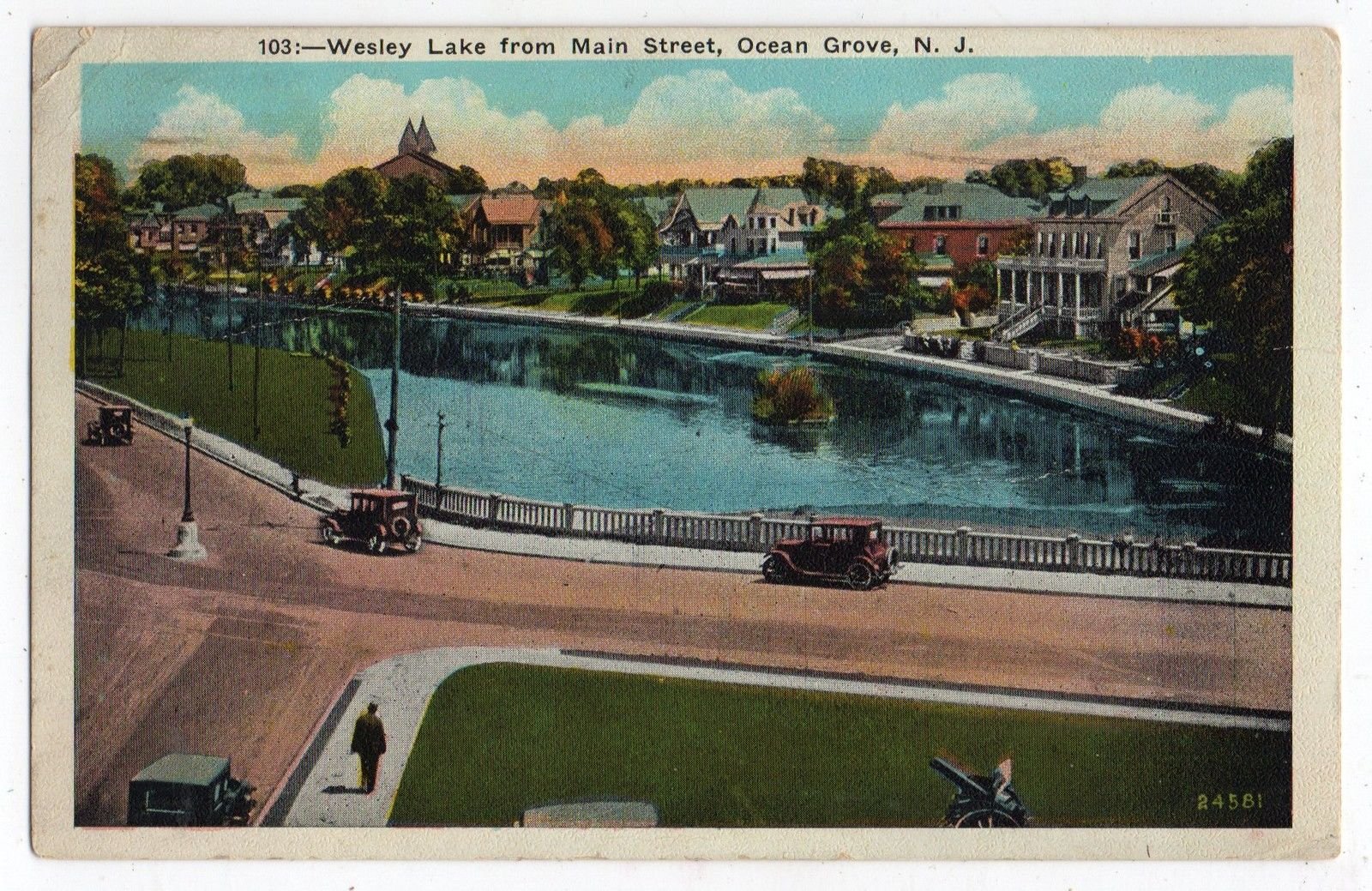
Wesley Lake view from Main Ave (1925)